
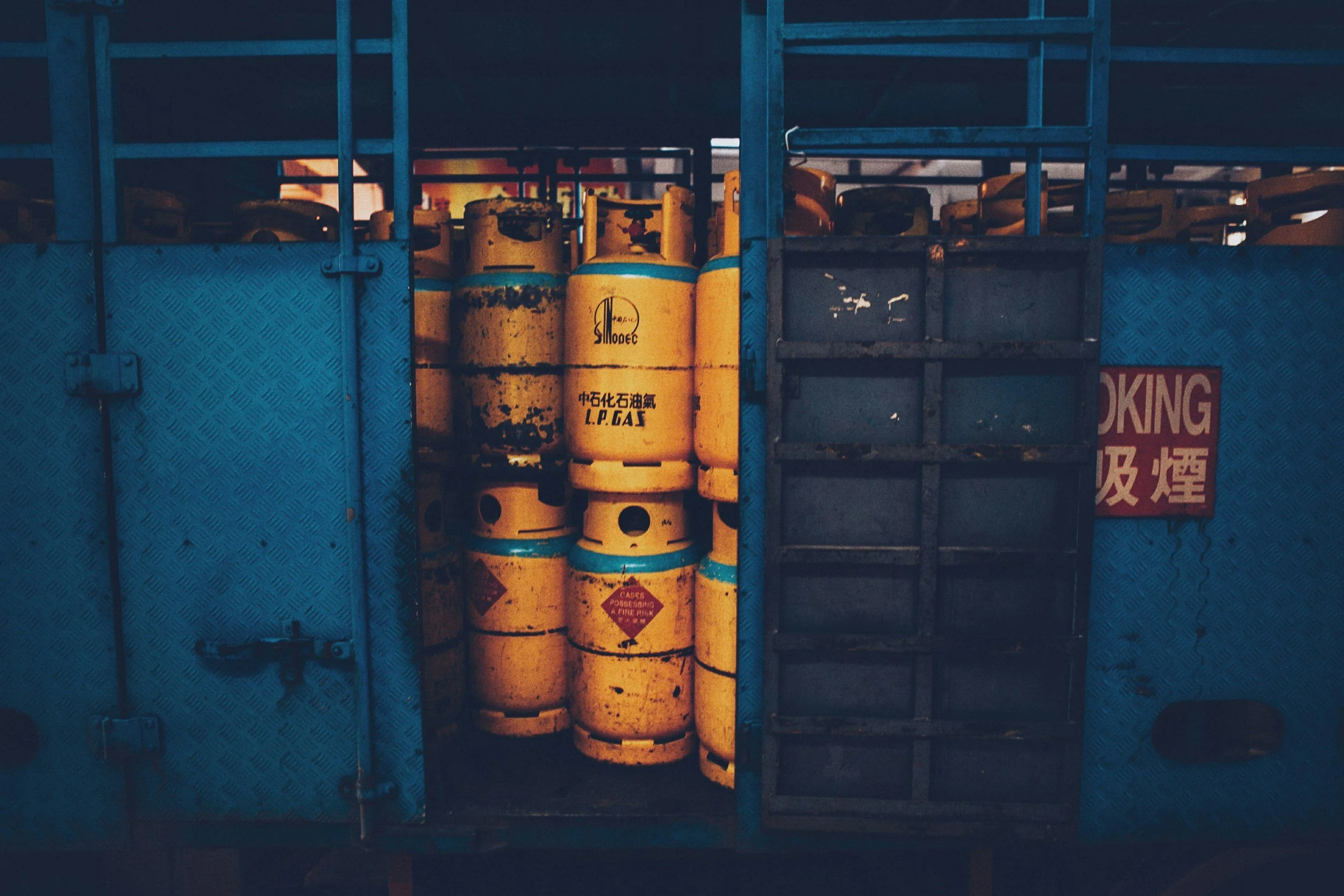
Gas bottles and cylinders are valuable reusable assets, but they are frequently dispersed across filling plants, depots, vehicles, distributors, customer sites, construction projects, hospitals, restaurants, and industrial facilities. Once a cylinder leaves the filling plant, operators may have limited visibility into where it is, who is responsible for it, whether it is full or empty, and when it will return.
A gas bottle tracking system creates a digital record for each cylinder and follows its operational journey. By combining serialized identification with scanning, gateways, and connected devices such as NB-IoT trackers, operators can reduce manual reconciliation and make decisions using current asset data rather than estimates.[2][4]
Why gas bottle tracking matters
Cylinder fleets represent substantial working capital. A cylinder that remains at a customer site for months, is returned through the wrong distributor, or disappears from the circulation network cannot be filled and used to generate revenue.
Effective cylinder management is also closely connected with maintenance, inspection, filling, storage, handling, and distribution practices. World Liquid Gas publishes industry guidance covering these operational responsibilities across the LPG cylinder lifecycle.[1] Road transport of dangerous goods is separately governed by requirements such as ADR in applicable jurisdictions.[3]
Tracking does not replace these safety and regulatory processes. It provides a more reliable information layer to support them.
What information should be associated with each cylinder?
A useful digital cylinder record can include:
A permanent cylinder or asset identifier
Owner and responsible operator
Gas type and cylinder specification
Filled, issued, returned, quarantined, or empty status
Filling plant and most recent fill event
Distributor, vehicle, customer, or site currently holding the asset
Inspection, test, and maintenance dates
Delivery and return timestamps
Reported damage, loss, or abnormal handling events
Links to relevant documentation and certificates
The GS1 Global Returnable Asset Identifier, or GRAI, is specifically designed to identify reusable assets and can support standardized identification across companies and systems.[2] A company can also use its own serialized identifiers where that is more appropriate, provided every cylinder remains uniquely and consistently identifiable.
How an IoT gas bottle tracking system works
There is no single hardware configuration that is correct for every cylinder fleet. The architecture should reflect the value of the cylinders, their movement frequency, the surrounding infrastructure, and the level of visibility required.
1. Give every cylinder a digital identity
Each cylinder receives a durable identifier, commonly encoded in a barcode, QR code, RFID tag, or another machine-readable label. Scanning that identifier creates events such as filled, loaded, delivered, collected, inspected, or quarantined.
This is usually the most economical foundation for fleet-wide traceability.
2. Track movements at operational checkpoints
Readers, mobile devices, or IoT gateways can register cylinders as they pass through filling lines, warehouses, loading areas, trucks, distributors, and customer locations. Instead of reconstructing movements from paper records, the platform builds a time-stamped chain of custody.
3. Add active tracking where it produces value
High-value cylinders, cylinder cages, pallets, transport frames, or mobile collections can be equipped with active trackers. Depending on the deployment, these devices may report location, movement, temperature, or other telemetry through cellular or low-power networks.
Sensefinity's connected tracking approach combines IoT devices with a digital supply-chain management platform, allowing asset events and condition data to be viewed within the same operational context.[4][5]
An active location tracker does not automatically know how much gas remains inside a cylinder. Fill-level visibility requires an appropriate pressure, weight, flow, or level sensor and must be engineered for the specific cylinder, gas, and safety environment.
4. Turn events into operational workflows
Collecting data is only useful when the system can act on it. Business rules can identify:
Cylinders that have not returned within an expected period
Assets delivered to the wrong location
Unusually long distributor or customer dwell times
Missing delivery or collection scans
Cylinders approaching inspection or maintenance dates
Unexpected movement outside an authorized area
Disagreement between physical scans and inventory records
Teams can then investigate exceptions instead of manually checking every cylinder.
Operational benefits
Improve cylinder fleet utilization
Knowing which cylinders are available, filled, in transit, held by customers, or overdue helps operators understand the real capacity of the fleet. This can reduce unnecessary cylinder purchases and improve filling and distribution planning.
Reduce loss and unrecorded transfers
A time-stamped history makes it easier to determine where custody changed and where an asset was last recorded. This does not prevent every loss, but it narrows investigations and creates accountability across the distribution network.
Accelerate returns
Operators can identify customers or distributors with unusually long return cycles and introduce collection reminders, deposit rules, service-level agreements, or scheduled pickups based on actual dwell-time data.
Maintain accessible asset histories
Inspection, filling, repair, delivery, and return events can be associated with the same serialized cylinder. This creates a more complete operational history than disconnected spreadsheets and paper documents.
Improve customer service
Customer-service teams can answer practical questions such as whether cylinders were delivered, which assets remain at a location, and when a collection occurred. Disputes can be investigated using shared event records rather than memory.
LPG, industrial gas, and medical gas deployments are different
An LPG exchange network may manage very large numbers of standardized cylinders through distributors and retail points. An industrial-gas operator may need to track higher-value cylinders moving between factories, laboratories, workshops, and construction sites. Medical-gas operations can involve additional handling, quality, and availability requirements.
The same traceability principles apply, but the identification method, hardware, data retention, alerts, and operating procedures should be adapted to each use case. Equipment must also be selected and installed according to the relevant hazardous-area, transport, and safety requirements. An IoT project should never introduce unapproved equipment into a hazardous environment.
A practical implementation roadmap
A gas bottle tracking project can begin without instrumenting every cylinder with an active device.
Map the cylinder lifecycle. Document filling, storage, loading, delivery, exchange, collection, inspection, repair, and retirement.
Create a reliable asset register. Assign one persistent identity to each cylinder and remove duplicate or incomplete records.
Instrument the main checkpoints. Start with fill, dispatch, delivery, and return events.
Pilot active tracking selectively. Apply connected trackers to high-value assets, transport cages, routes, or customer segments where losses and delays are greatest.
Define exception rules. Decide what constitutes an overdue return, unexpected location, missing scan, or maintenance risk.
Integrate existing systems. Connect relevant events to ERP, inventory, customer-service, maintenance, or billing workflows.
Measure operational outcomes. Track return-cycle time, lost assets, fleet utilization, scan completeness, and investigation time.
From cylinder inventory to a visible asset network
Gas bottle tracking is not simply a map showing dots. Its real value comes from connecting identity, custody, location, operational status, and lifecycle history.
Sensefinity can help gas suppliers and cylinder-fleet operators design a tracking architecture that combines serialized assets, IoT connectivity, gateways, and operational software. The objective is to begin with the most valuable visibility gaps and expand only where the resulting data supports a clear operational decision.
To discuss a pilot for LPG, industrial, or medical gas cylinders, contact Sensefinity and identify one route, depot, distributor network, or customer segment where missing assets or slow return cycles have a measurable cost.
Sources
[1] World Liquid Gas — Guide to Good Industry Practices for LPG Cylinder Management
[2] GS1 — Global Returnable Asset Identifier
[3] UNECE — ADR 2025