5g

The F-35 Shipment That Went to Hong Kong: Why Critical Components Need Verifiable Custody

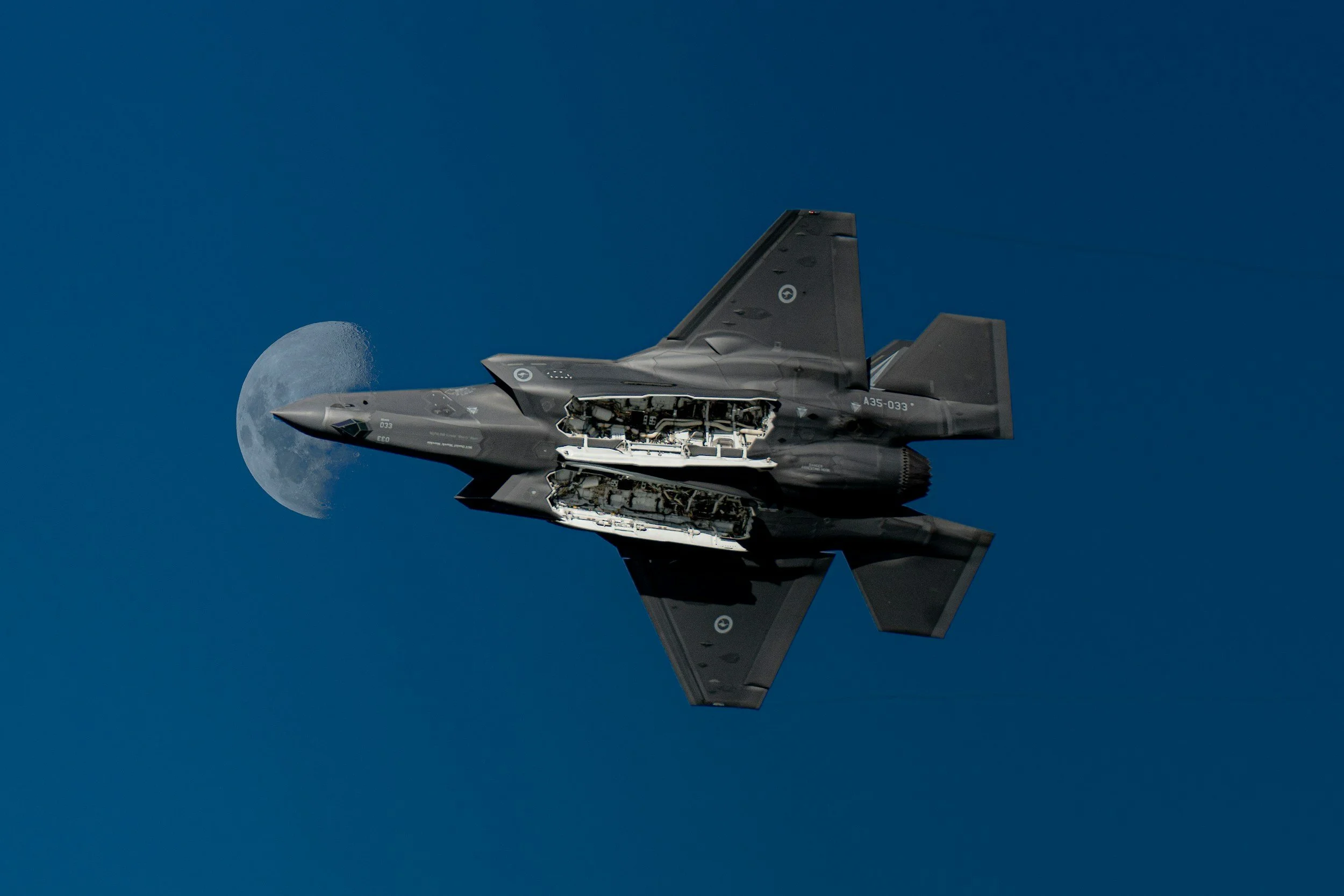
Australia confirmed on 22 September that unserviceable F-35 components shipped from the country for repair in the United States had instead been diverted to Hong Kong. The Australian government is assisting US authorities and Lockheed Martin with the investigation.

ABC reported that the shipment included a canopy incorporating radar-resistant technology and that an intermediary was responsible for transport. Australia’s defence minister, Richard Marles, also said that, according to his understanding, no technologically sensitive equipment had been lost. The reason for the diversion, the present location of every component and any access by a third party have not been publicly confirmed.

That distinction matters. This is not evidence that China obtained F-35 secrets. It is evidence of a custody-control failure serious enough to trigger government and congressional scrutiny.

A manifest records intent, not physical reality

A shipping document can say “United States” while the physical asset travels somewhere else. In a multi-party transport chain, information moves through maintenance teams, freight forwarders, airlines, customs agents and repair facilities. A wrong routing instruction, an unauthorised change or a simple mismatch between systems can survive several handoffs before anyone sees the full picture.

Critical logistics therefore needs independent evidence tied to the component itself—not only to an aircraft, booking or airway bill.

At Sensefinity, we connect the physical unit to its digital identity. An item-level or case-level sensor can report location, movement, opening, light exposure, separation from its assigned container and abnormal loss of communication. Geofences can cover approved routes, airports and jurisdictions. When the component leaves that policy envelope, the platform can create an exception while intervention is still possible.

An alert does not prove hostile intent. It reduces the time between divergence and response.

Learn more about Sensefinity Cargo Safety.

A destination change must become a signed custody event

Rerouting is normal in global logistics. Silent rerouting is not acceptable for controlled components.

Every destination or carrier change should require:

  • strong identity for the requesting party;

  • dual authorisation for high-risk exceptions;

  • an explicit reason and timestamp;

  • confirmation through a channel independent of the change request;

  • acceptance by the new carrier and consignee;

  • reconciliation with the component’s live telemetry.

Each physical handoff should bind the person, organisation, component identifier, seal, time and location. If the transport record says the United States while the sensor indicates Hong Kong, the mismatch should block automatic acceptance and open an investigation.

Blockchain makes later rewriting visible

Sensors show what happened in the physical journey. Blockchain can help preserve who authorised it, what each participant accepted and which record existed at a specific time.

The right design for sensitive supply chains is permissioned. Military or commercially restricted information does not need to be published on a public chain. Hashes, identities, document versions and timestamps can be anchored while operational detail remains off-chain under access control.

This creates a shared, tamper-evident chronology across organisations that may not share one database. An investigator can compare the original manifest, authorised route, sensor events, custody receipts and later changes without trusting a single party’s retrospective export.

Blockchain does not make bad input true, and it does not physically prevent diversion. It is effective when combined with authenticated sensors, strong approvals and an operational response process.

See how our Blockchain solution connects telemetry, identity and chain of custody.

Five controls critical shipments should adopt now

  1. Bind identity to the physical unit. Link every component, case and container to its sensor, seal, manifest and authorised destination.

  2. Monitor policy, not just position. Alert on prohibited jurisdictions, route deviations, unplanned transfers, opening and abnormal silence.

  3. Make changes explicit. Require dual approval and out-of-band confirmation for destination, carrier or consignee changes.

  4. Prove every handoff. Record strong identity, time, location, condition and counterparty acceptance at each custody transfer.

  5. Preserve the evidence. Keep raw telemetry and anchor approvals and versions in a permissioned, tamper-evident record with defined escalation and recovery procedures.

The lesson is broader than defence. Semiconductor equipment, prototypes, medical products, luxury goods and other high-value assets face the same gap between the route written in a system and the journey taken by the physical object.

Critical cargo should never be “somewhere in the network.” It should have a continuously verifiable identity, route and custodian.

Read the complete Prova analysis, including the confirmed facts and the limits of what is publicly known.

Sources

NB-IoT, LTE-M or Cat 1 bis? Choosing the right cellular link for real-world IoT

Choosing cellular connectivity for an IoT product is not a contest to find the newest acronym. It is a design decision about where the device will travel, how often it reports, how much data it sends, how long it must run and which networks are actually available along the route.

NB-IoT, LTE-M and LTE Cat 1 bis all use licensed cellular spectrum, but they solve different problems. NB-IoT and LTE-M are 3GPP low-power wide-area technologies introduced in Release 13. Cat 1 bis is a simplified version of LTE Cat 1 that uses one receive antenna instead of two.[1][3]

None is the universal winner. The right answer comes from the workload.

Three technologies, not three generations

It is tempting to arrange the options as a ladder: NB-IoT at the bottom, LTE-M in the middle and Cat 1 bis at the top. That misses the point.

NB-IoT is deliberately narrow. It gives small, infrequent messages a path through licensed networks while keeping device complexity and power demand low. LTE-M adds better mobility, responsiveness and throughput while retaining LPWA power-saving features. Cat 1 bis uses the broader LTE footprint and offers much more data capacity, but it is not classified as an LPWA technology by the GSMA.[1]

The comparison is closer to choosing a vehicle. A bicycle, a van and a truck can all move goods, but the payload and route decide which one makes sense.

Where NB-IoT has the advantage

NB-IoT is built for devices that sleep most of the time, wake up, send a small reading and return to sleep. 3GPP designed it for improved indoor coverage, large populations of low-throughput devices, low delay sensitivity, low device cost and low power consumption. It can run inside an LTE carrier, in the guard band or in dedicated spectrum.[2]

That profile fits applications such as:

  • meters and tank-level sensors;

  • environmental monitoring;

  • stationary cold-chain sensors;

  • returnable packaging that reports occasionally;

  • assets stored in basements, warehouses or other difficult radio locations.

Its narrow 180 kHz carrier and coverage-enhancement modes help when penetration matters more than speed. Power Saving Mode and extended discontinuous reception can keep the modem asleep for long periods, although real battery life still depends on signal quality, reporting frequency, retries, temperature, battery chemistry and operator settings.[1]

The trade-off is responsiveness. NB-IoT is intended for small payloads and delay-tolerant traffic. Classic Release 13 deployments do not provide the seamless handover expected by fast-moving trackers; later releases added mobility improvements, but support depends on the module and network. It is not the first choice for frequent position updates, large firmware downloads or an asset that continuously crosses cell boundaries.

Where LTE-M has the advantage

LTE-M, also called Cat-M1 in its first widely deployed form, keeps many LPWA benefits while behaving more like mobile LTE. It supports handover between cells, lower latency and higher throughput than NB-IoT. This is useful when the device is attached to a pallet, trailer, container, vehicle or piece of equipment that keeps moving.

LTE-M is a good fit for:

  • mobile asset and cargo tracking;

  • regular GNSS position and sensor updates;

  • alarms that need a faster response;

  • larger over-the-air firmware updates;

  • wearables and safety devices;

  • products that may need voice, where the operator has enabled VoLTE for LTE-M.

The GSMA describes LTE-M as an LPWA technology with low device complexity, low power use, extended coverage, low latency and support for high connection density.[1] It also supports PSM and eDRX, so a well-designed tracker can spend most of its life asleep and wake only when movement, a schedule or a sensor event requires a report.

LTE-M's weakness is not the radio specification. It is availability. Operators have deployed NB-IoT and LTE-M unevenly, and roaming support is not identical to ordinary smartphone LTE roaming. The GSMA's launch inventory shows substantial commercial deployment of both technologies, but a country appearing on a list does not prove that the required band, operator, roaming agreement or power-saving feature will work for a specific device.[5]

Where Cat 1 bis has the advantage

LTE Cat 1 bis takes a different route. It keeps Cat 1's data capability and standard LTE operation but removes the second receive chain and antenna. That reduces hardware complexity, board area and cost. The price is a coverage penalty compared with two-antenna Cat 1, particularly near the cell edge.[1][3]

Cat 1 bis can reach the Cat 1 class maximum of about 10 Mbps downlink and 5 Mbps uplink; commercial modules advertise those figures for supported networks.[4] That capacity changes what an IoT device can do:

  • transfer larger firmware images more quickly;

  • upload richer diagnostics or frequent telemetry;

  • support payment terminals and industrial gateways;

  • send audio or limited image data where the application requires it;

  • provide tracking and telematics across ordinary 4G LTE coverage.

It also supports mobility and standard LTE handover. Because it does not need the network to activate a separate NB-IoT or LTE-M radio feature, Cat 1 bis can be easier to deploy across regions where 4G LTE is present but LPWA coverage is incomplete.[1][3]

The compromise is power. New Cat 1 bis modules may support PSM and eDRX, but Cat 1 bis is not an LPWA category and network support for those modes is not uniform. Its faster transfer can reduce radio-on time for a large payload, yet a small sensor sending a few bytes may still get better energy economics from NB-IoT or LTE-M. The only reliable answer comes from measuring the complete duty cycle on the target networks.

The comparison in one view

NB-IoT

  • Primary strength: deep coverage and very low power for small, infrequent messages.

  • Mobility: best for stationary or slowly changing deployments; support for later-release mobility features varies.

  • Typical data: tiny, delay-tolerant telemetry.

  • Power profile: usually strongest for long sleep cycles and sparse reporting.

  • Voice: not supported.

  • Coverage dependency: requires an operator's NB-IoT deployment and compatible bands.

  • Best starting point: static sensors, metering, storage and hard-to-reach locations.

LTE-M

  • Primary strength: low-power mobility with moderate throughput and faster response.

  • Mobility: seamless handover between cells.

  • Typical data: regular telemetry, GNSS positions, alarms and manageable firmware updates.

  • Power profile: a strong balance of battery life and mobile operation.

  • Voice: possible when the operator supports VoLTE on LTE-M.

  • Coverage dependency: requires LTE-M deployment, compatible bands and suitable roaming agreements.

  • Best starting point: cargo and asset tracking that moves between cells.

LTE Cat 1 bis

  • Primary strength: higher throughput across ordinary LTE infrastructure.

  • Mobility: standard LTE mobility and handover.

  • Typical data: frequent telemetry, large firmware images, logs, audio or limited image data.

  • Power profile: sleep modes are possible, but active and network behaviour need closer power budgeting.

  • Voice: possible on some modules and operator profiles.

  • Coverage dependency: uses standard LTE, but bands, certification and roaming still need validation.

  • Best starting point: higher-data IoT or global products where LTE-M availability is insufficient.

These are design tendencies, not procurement guarantees. A module data sheet cannot tell you whether a roaming SIM will access a feature in a particular port, warehouse or border corridor.

What to test before choosing

A connectivity decision should begin with a route and workload model.

Map the real network footprint. Check every country, operator and LTE band in the planned deployment. Test roaming, not just home-network attachment. An operator may support a technology domestically but restrict access to roaming devices.

Model the complete energy budget. Include network search, registration, TLS setup, retransmissions, GNSS acquisition, sensor warm-up and firmware downloads. The lowest sleep current does not rescue a device that repeatedly searches for a missing network.

Use the real payload. Protocol headers and security handshakes may be larger than the sensor message. Compression, batching and event-driven reporting can change the best radio choice.

Plan firmware updates on day one. A product expected to remain deployed for years will need security and application updates. Estimate the worst-case image size, transfer time and energy cost before fixing the modem architecture.

Test cell edges and movement. Laboratory signal levels do not reproduce a metal container, a refrigerated trailer, a basement or a device moving between countries. Antenna placement and enclosure design can matter as much as the modem category.

What this means for cargo and asset tracking

A stationary temperature logger in a warehouse and a high-value shipment crossing five countries are both IoT devices, but they do not have the same connectivity problem.

NB-IoT can be the right choice when the asset remains within known coverage, messages are small and long battery life has priority. LTE-M is often the stronger fit when a tracker moves, reports position and condition regularly, and must keep sessions alive through cell changes. Cat 1 bis becomes attractive when the route has broad LTE but inconsistent LTE-M availability, or when the device needs larger updates and richer data.

Some products should support more than one radio mode. A multimode design can prefer LTE-M for mobility, use NB-IoT where available for sparse telemetry, or select Cat 1 bis for a separate high-throughput product family. That flexibility has a cost in hardware, certification, firmware and testing, so it should solve a real deployment problem rather than become a feature-list exercise.

At Sensefinity, connectivity is part of the Internet of Cargo, not the whole solution. The useful outcome is verified information about location, temperature, humidity, shock, opening events and custody, delivered with the right balance of coverage, energy and cost. Our NB-IoT trackers and cargo-monitoring work begin with that operational question: what must the customer know, where and how quickly?

The decision rule

Choose NB-IoT when the message is small, the device sleeps for long periods and coverage penetration matters more than mobility or speed.

Choose LTE-M when the asset moves and the application needs LPWA power consumption with handover, lower latency and enough throughput for regular tracking and updates.

Choose Cat 1 bis when higher data rates and the ordinary LTE footprint matter more than achieving the lowest possible power profile.

Then verify the choice on the target operators, bands, routes and enclosures. A technology comparison narrows the field. Field testing makes the decision.

Sources

[1] https://www.gsma.com/solutions-and-impact/technologies/internet-of-things/wp-content/uploads/2024/10/Mobile-IoT-in-a-5G-Future-Final.pdf — Mobile IoT in a 5G Future — GSMA [2] https://3gpp.org/news-events/3gpp-news/niot — NarrowBand IoT — 3GPP [3] https://www.u-blox.com/en/blogs/insights/lte-cat-1bis — LTE Cat 1bis — u-blox [4] https://www.quectel.com/product/lte-cat-1-bis-eg916q-gl — LTE Cat 1 bis EG916Q-GL — Quectel [5] https://www.gsma.com/solutions-and-impact/technologies/internet-of-things/mobile-iot-commercial-launches — Mobile IoT network launches — GSMA

When Cold-Chain Service Cannot Be Proven: The Graciosa Fish Case

Complaints reported on 9 September 2026 about cold handling for fish air cargo travelling to and from Graciosa Island raise a simple but important question: how can an operator prove that the paid refrigeration service was actually delivered at every stage? The allegations still require investigation, but the underlying visibility gap is already clear.

An invoice is not a temperature record

A service charge confirms that refrigeration was purchased. It does not show when a fish lot entered cold storage, its temperature while waiting or transferring, how long it remained outside its permitted range, or who held custody when a deviation occurred.

For perishable cargo, those facts must travel with the lot. Sensefinity's cold-chain monitoring connects temperature, location and time data so teams can receive alerts while intervention is still possible—not discover a broken chain only after delivery.

Each transfer needs evidence

The risk is not limited to the flight. It can appear at the dock, during transport to the airport, while awaiting screening, at an intermediate stop or at final delivery. Every handover needs an accountable party, defined thermal limits and a continuous record.

Sensor data can be linked to a tamper-resistant blockchain audit trail, creating evidence of what happened, where and when. Blockchain does not refrigerate fish; it helps prove whether the cold-chain process was followed.

Read the full Prova analysis

Our partner publication Prova examines the Graciosa case in greater detail, including how real-time alerts, lot-level traceability and a Digital Product Passport can support release, inspection, quarantine and claims decisions.

Read “Fish cold chain in the Azores: proving the service was delivered” on Prova.

The lesson is practical: for temperature-sensitive cargo, availability is not enough. The supply chain must be able to demonstrate, operation by operation, that the service was delivered and the product remained within its agreed conditions.

Fewer Thefts, Twice the Losses: The $304.6 Million Visibility Gap

Cargo theft incidents fell in the second quarter of 2026. The financial damage did not.

Verisk CargoNet documented 677 supply-chain theft incidents across the United States and Canada in Q2 2026, down 26% from the same quarter a year earlier. Yet estimated losses rose from $135.7 million to $304.6 million. Among incidents with a reported commodity value, the average reached $564,009.

This is not a contradiction. It is a warning: organized groups do not need to steal more freight when they can identify and divert the right freight.

For shippers of enterprise technology, metals, pharmaceuticals, food and other high-value goods, the new risk is concentration. A single compromised shipment can now erase the benefit of dozens of successful deliveries.

The shipment has become the target

CargoNet’s analysis points to continued targeting of enterprise computer equipment, networking components, cryptocurrency-mining hardware and industrial metals. These goods often travel through conventional logistics networks even when the value inside a trailer reaches several million dollars.

That creates a dangerous mismatch: extraordinary cargo protected by ordinary visibility.

A transport-management system may confirm that a truck was assigned. A carrier portal may show that a delivery is in progress. Neither necessarily proves that the valuable pallet is still with the expected vehicle, following the authorized route or remaining under the correct custody.

The distinction matters because modern cargo theft is increasingly strategic. CargoNet reports that business-email compromise and shipment misdirection remain important access points. Criminals can use a compromised account to identify valuable loads, impersonate trusted parties and alter shipment instructions while appearing legitimate.

In that environment, tracking the journey only at dispatch and delivery leaves too much time—and too many handovers—unobserved.

From vehicle visibility to cargo visibility

The answer is not one more status call. It is an independent data layer attached to the asset that matters.

Sensefinity’s NB-IoT trackers and sensors are designed to locate assets on land and at sea, record environmental conditions and generate alerts when an asset enters or leaves a configured geofence. Depending on the use case, the monitored asset can be a container, a pallet, a crate or the cargo itself.

This changes the security model in four practical ways:

  • Independent location: the shipment can report its own position instead of relying only on the tractor, trailer or driver’s phone.

  • Geofence alerts: an unexpected departure from an authorized corridor, yard or destination can be flagged while intervention is still possible.

  • Condition monitoring: temperature and humidity thresholds help reveal whether sensitive cargo remained within specification during a diversion or delay.

  • Datalogging and auditability: a continuous history gives operations, insurers and investigators evidence of where the asset moved and under which conditions.

No single technology prevents every theft. Carrier verification, access controls, secure communications and trained people remain essential. Cargo-level IoT complements those controls by reducing the period in which a diverted shipment is invisible.

Why response time determines recovery

High-value cargo moves quickly after a successful theft. Loads may be transferred, split, relabelled or routed into established resale channels. The longer a shipper waits to discover a deviation, the less useful yesterday’s location becomes.

Real-time alerts turn detection into an operational event rather than a reconciliation problem. If an asset exits a planned geofence or fails to arrive where expected, the shipper can investigate immediately, preserve the movement history and share actionable information with security partners.

The goal is not simply to know that a loss occurred. It is to know soon enough to change the outcome.

Proof across every handover

Location answers “where?” High-risk supply chains must also answer “what happened?” and “who had custody?”

Sensefinity’s IoT data can also be registered in a logistics blockchain, creating a traceable record of location and environmental conditions such as temperature, humidity and shock. This combination links physical events to a shared digital history.

For insurers and cargo owners, that evidence can support faster incident reconstruction. For customers, it can strengthen confidence that a shipment followed the expected route and remained within agreed conditions. For regulated or sensitive goods, it helps replace assumptions with verifiable data.

The lesson behind $304.6 million

The Q2 figures show why incident counts alone can be misleading. Fewer thefts did not produce lower risk because criminals concentrated on more valuable cargo and more sophisticated methods.

Supply-chain security must respond in the same way: focus protection on the shipment, not only on the vehicle; detect deviations as they happen, not after delivery fails; and preserve evidence across every handover.

The next loss may not come from more crime. It may come from one carefully selected load moving through one avoidable blind spot.

Sensefinity turns containers, pallets and cargo into connected assets—helping companies see where their goods are, understand their condition and act when the journey no longer matches the plan.

Talk to Sensefinity about cargo-level visibility.

Sources

  • Verisk CargoNet, “Cargo Theft Losses More Than Double to $304 Million in Q2 Despite a Drop in Thefts,” 6 August 2026: https://www.globenewswire.com/news-release/2026/08/06/3340253/0/en/cargo-theft-losses-more-than-double-to-304-million-in-q2-despite-a-drop-in-thefts-driven-by-high-value-metals-and-technology-heists.html

  • Sensefinity, “NB-IoT Trackers”: https://www.sensefinity.com/nbiot-trackers

  • Sensefinity, “Blockchain”: https://www.sensefinity.com/blockchain

The Trailer Was Found. The Servers Were Gone: Why High-Value Cargo Needs Item-Level Visibility

A stolen trailer carrying several pallets of server equipment was recovered in Germany within minutes of its original location. The GPS tracker had worked. The trailer had been found.

But the cargo — reportedly worth millions of euros — was already gone.

The incident, reported by VerkehrsRundschau on 2 September 2026, exposes a critical weakness in conventional cargo security: knowing where the vehicle or trailer is does not necessarily tell you where the goods are.

For high-value logistics, visibility must travel with the cargo itself.

What happened in Herzberg am Harz

According to the report, a semi-trailer containing several pallets of server technology was parked in the Aue industrial area of Herzberg am Harz, in Germany’s Göttingen district, on Friday afternoon. The equipment was destined for a data centre and was scheduled for delivery on Monday.

At approximately 21:50 on Sunday, 30 August, thieves allegedly connected the trailer to an unidentified tractor unit and drove it away. When the driver returned early on Monday, the trailer had disappeared.

The transport company used a GPS transmitter to locate it near a recycling facility on Kreisstraße 409. The journey appears to have taken only a few minutes. By the time the trailer was recovered, however, it was empty.

Police found a pallet truck and the trailer’s registration plate near the recovery location. Investigators believe the volume and weight of the missing server equipment may have required several people and one or more additional vehicles.

The estimated loss runs into the millions of euros.

Trailer tracking solved only half the problem

This case is not evidence that GPS tracking is useless. On the contrary, the tracker helped recover the stolen trailer quickly.

It does show the limit of tracking only the transport asset.

A trailer and its load can separate in minutes. Once pallets are transferred to another vehicle, a tracker fixed to the trailer continues to report the location of an empty metal box. The logistics operator may know where the equipment was last transported, but not where it went next.

That distinction matters whenever the cargo is more valuable than the vehicle carrying it. Servers, semiconductors, electronics, pharmaceuticals and other high-value goods require a security model centred on the shipment — not only on the truck or trailer.

Cargo-level visibility changes the response

At Sensefinity, we believe the monitoring architecture should match the value and risk profile of the cargo. For a shipment such as this one, visibility can be layered across the trailer, pallets and, where justified, individual high-value assets.

Smart trackers and sensors can provide:

  • Independent pallet-level location: selected pallets remain visible after being removed from the original trailer.

  • Geofence alerts: an unexpected departure from a loading area, route or approved delivery zone can trigger an immediate warning.

  • Movement and handling events: sensor data can identify unauthorised movement or a transfer occurring outside the planned operation.

  • Environmental monitoring: temperature, humidity and shock data can protect sensitive equipment against damage as well as theft.

  • Exception-based operations: teams receive actionable alerts instead of having to watch dots on a map continuously.

The objective is not simply to collect more data. It is to shorten the interval between an unauthorised event and an operational response.

In a theft completed within minutes, that interval is decisive.

From location history to verifiable chain of custody

Location data becomes more useful when it is connected to shipment identity and custody events.

Who released the cargo? Which vehicle collected it? Was the collection expected? When did custody change? Did the pallet follow the authorised route? Was it delivered to the correct consignee?

Sensefinity combines IoT tracking with a blockchain layer that can register selected logistics events in a tamper-resistant record. Trackers and sensors act as oracles, connecting physical events to the digital ledger. Authorised partners can verify key information without requiring unrestricted access to one another’s internal systems.

For high-value cargo, this creates a stronger evidence trail across shippers, carriers, warehouses and recipients. It can support investigations, claims, compliance and dispute resolution — while making unauthorised substitutions or unexplained custody gaps easier to detect.

A Digital Product Passport can extend that verified identity throughout the asset lifecycle, connecting origin, logistics operators and other product information to a persistent digital record.

A practical layered-security model

No single device can eliminate cargo theft. Effective protection combines physical, operational and digital controls.

For high-value technology shipments, operators should consider:

  1. Tracking the trailer and selected pallets independently.

  2. Creating geofences around loading sites, authorised stops and delivery locations.

  3. Triggering alerts for movement outside approved time windows.

  4. Linking sensor identities to shipment and custody records.

  5. Escalating exceptions to named responders with a documented playbook.

  6. Reviewing where cargo can be transferred quickly and without observation.

  7. Preserving verifiable event data for investigations and insurance claims.

The right configuration depends on shipment value, route, dwell time and threat profile. The important point is that the monitoring plan must follow the risk all the way down to the level at which the cargo can disappear.

Track what creates the value

The trailer in Herzberg was recovered. The multimillion-euro load was not.

That difference captures the challenge facing high-value logistics: asset tracking can locate the container of value without locating the value itself.

Sensefinity’s NB-IoT trackers and smart sensors help organisations monitor cargo on land and at sea, configure geofence and environmental alerts, and connect physical logistics events to trustworthy digital records.

If your organisation transports servers, electronics or other high-value goods, talk to Sensefinity about designing a cargo-level visibility and chain-of-custody strategy.

Primary source: Thomas Burgert, “Unbekannte stehlen Sattelauflieger mit teurer Servertechnik,” VerkehrsRundschau, 2 September 2026. The source reports that the theft occurred on 30 August 2026.

Samsara’s 30% Growth Sends a Clear Signal: Tracking Is Becoming Essential Infrastructure

On 3 September 2026, Samsara reported a quarter that should make every logistics leader pay attention. Revenue reached $508.4 million, up 30% year over year, while annual recurring revenue crossed $2.1 billion, also growing 30%. The company added a record 242 customers spending more than $100,000 annually and 20 customers above $1 million.[1]

The important story is larger than one company’s earnings. These numbers are evidence of a structural change: connected operations, real-time visibility and AI based on physical-world data are moving from optional tools to essential infrastructure.

For Sensefinity, this is a strong market signal. We focus specifically on the cargo itself—containers, pallets, crates, temperature-sensitive goods and other valuable assets. As enterprises invest more deeply in connected operations, the need for cargo-level intelligence grows with them.

Enterprises are no longer buying isolated trackers

Samsara’s results show that large organizations increasingly want a common operational data layer. Among its customers generating more than $100,000 in annual recurring revenue, 96% use at least two products and 72% use at least three. Emerging products accounted for more than 20% of net new annual contract value for the third consecutive quarter.[1]

That pattern matters. Companies are not simply buying a dot on a map. They are connecting vehicles, equipment, sites and workflows so they can detect risk, automate decisions and improve performance across the operation.

Tracking is becoming the foundation for several outcomes at once:

  • knowing where vehicles, equipment and cargo are;

  • detecting delays, deviations and unauthorized movements;

  • protecting temperature-sensitive or high-value goods;

  • reducing manual status checks and fragmented spreadsheets;

  • feeding AI with reliable, real-time operational context;

  • creating evidence for compliance, insurance and customer service.

The market is shifting from “Where is my truck?” to “What is happening to every critical asset, and what should we do next?”

AI needs real-world data before it can create value

Samsara said adoption of some of its newest AI features increased more than fourfold in two months. Its platform now collects more than 30 trillion data points annually, up more than 40% year over year.[1]

This highlights a basic truth about physical AI: algorithms cannot improve an operation they cannot see.

A useful AI system needs current information from the field—position, movement, temperature, humidity, shock, dwell time, route changes and custody events. Without sensors and connected assets, AI is left working with delayed reports and incomplete assumptions. With live data, it can identify exceptions, forecast risk and recommend action while the outcome can still be changed.

Sensefinity applies that principle to supply chains. Our approach combines trackers and sensors with analytics, alerts and AI so organizations can learn from physical operations and react to events in real time.[5]

The cargo—not only the vehicle—must be connected

Fleet visibility solves an important part of the problem, but a vehicle and its cargo are not the same asset.

A trailer can be located after pallets have been removed. A truck can arrive on time while refrigerated products have experienced a damaging temperature excursion. A container can follow the planned route while an individual high-value item is substituted, opened or diverted during a handover.

That is where Sensefinity’s specialization becomes important. The Internet of Cargo connects the goods themselves and makes supply chains context-aware. Sensefinity provides real-time tracking, condition monitoring, operational alarms and KPIs across logistics operations.[4]

Our NB-IoT trackers and sensors can be attached to containers, pallets and crates. They support asset location, configurable geofence alerts, temperature and humidity thresholds, datalogging and long-life operation for use cases where continuous charging is impractical.[2]

This cargo-level layer complements fleet and connected-operations platforms. It closes the visibility gap between the movement of the vehicle and the condition, identity and custody of what the customer is actually paying to transport.

Why demand for tracking continues to rise

Several forces are reinforcing one another.

Supply chains are more valuable. Servers, electronics, pharmaceuticals, specialized components and premium food can concentrate enormous value in one shipment.

Exceptions are more expensive. A few hours of delay, an unnoticed temperature breach or an unauthorized transfer can turn a successful delivery into a write-off, recall or insurance claim.

Customers expect proof. “Delivered” is no longer enough. Companies increasingly need evidence of route, condition, origin and custody.

AI adoption increases the value of sensors. Every useful prediction depends on timely, trustworthy data from the physical operation.

Enterprises want fewer blind spots. As connected platforms expand across vehicles and sites, unconnected cargo becomes the missing part of the digital picture.

Samsara’s growth quantifies this wider appetite for visibility. Sensefinity is growing in the same demand environment, with a focused proposition for organizations that need intelligence at container, pallet and product level.

Sensefinity’s opportunity: deeper visibility and trusted data

Samsara’s financial performance is not a measure of Sensefinity’s revenue, and the companies operate at very different scales. What it validates is the category: organizations are allocating more budget to technology that connects physical operations and turns live data into action.

Sensefinity extends that value through cargo-specific capabilities and a blockchain layer. Data collected by trackers and sensors—including location, temperature, humidity and shock—can be registered in the logistics blockchain to create a more trustworthy record across partners.[3]

That combination supports a broader progression:

  1. Connect the cargo with the appropriate tracker and sensors.

  2. Detect exceptions through real-time alerts and configured thresholds.

  3. Learn and forecast using AI and operational history.

  4. Share trusted evidence across selected supply-chain partners.

  5. Act earlier to prevent waste, theft, delays and quality failures.

This is why the growth of connected operations is relevant to Sensefinity. The more enterprises digitize vehicles, equipment and workflows, the clearer the need becomes to connect the cargo moving between them.

A market signal worth acting on

Thirty-percent growth at more than $2.1 billion in recurring revenue is not a niche technology story. It is evidence that visibility, sensors and physical AI are becoming part of how modern operations are built.[1]

The next stage is to make that visibility more granular: from fleets to trailers, from trailers to containers, from containers to pallets and, where the value or risk demands it, from pallets to individual products.

That is the growth path for the Internet of Cargo—and it is where Sensefinity is building.

Talk to Sensefinity about connecting your cargo, monitoring its condition and turning physical operations into trusted, actionable data.

Sources

[1] Samsara, “Samsara Crosses $2.1 Billion in ARR as Large Enterprises Standardize on Its Platform,” 3 September 2026: https://www.samsara.com/company/news/press-releases/q2-fiscal-year-27-results

[2] Sensefinity, “NB-IoT Trackers”: https://www.sensefinity.com/nbiot-trackers

[3] Sensefinity, “Blockchain”: https://www.sensefinity.com/blockchain

[4] Sensefinity, “Internet of Cargo”: https://www.sensefinity.com/internet-of-cargo

[5] Sensefinity, “AI for Supply Chains”: https://www.sensefinity.com/ai-for-supply-chains

From Tracking to Insurability: How Real-Time Cargo Data Changes Risk

Cargo insurance has traditionally relied on information collected before and after a journey. The shipper declares the goods and route, the insurer evaluates historical risk, and—if something goes wrong—the parties reconstruct the incident from documents, emails, photographs and testimony.

The most important part of the journey is often missing: reliable data from the cargo while the risk is unfolding.

Connected trackers and sensors change that model. They can report location, temperature, humidity, shock and other conditions in real time, generating alerts before an exception becomes a total loss. They can also preserve an evidence trail for claims, liability analysis and future underwriting.

This is the shift from tracking to insurability: using operational data not only to find cargo, but to understand and actively reduce the risk attached to it.

Insurance should help prevent the claim

Traditional insurance provides financial protection after a covered loss. Connected insurance can add a second layer: earlier warning while intervention is still possible.

Consider a refrigerated pharmaceutical shipment. A temperature alarm at the destination may confirm that the product is unusable. An alert during transport may allow the carrier to repair the refrigeration unit, move the cargo or protect the remaining shelf life.

The same principle applies to theft, route deviation, excessive humidity, impact and unexpected dwell time. The value of real-time monitoring is not simply that it records the event. It gives operators an opportunity to change the outcome.

Allianz Commercial has described cargo tracking as a risk-management tool that enables companies to act when goods are damaged or move off route. It also notes that real-time analysis of sensor data can support mitigation—for example, responding to excessive moisture or temperature before the damage becomes worse.[2]

At Sensefinity, this is the foundation of our Insurance of Things approach: connect the insured asset, detect harmful conditions and turn real-time data into preventive action.[3]

Better evidence can mean faster claims

When prevention is no longer possible, data still matters.

A cargo claim often raises difficult questions:

  • When did the damage begin?

  • Where was the shipment at that moment?

  • Was the temperature already outside specification before a handover?

  • Did a severe shock occur during loading, road transport or terminal handling?

  • Was the container opened outside an authorized location?

  • Which organization had custody when the event occurred?

Without an independent record, each participant may hold a different version of the journey. The result can be long correspondence, expert investigation and delayed settlement.

TT Club identifies specific insurance benefits from smart-container data. Real-time visibility can help insurers understand the volume and condition of units at risk, while an audit trail can help identify the origin of an incident or a potentially liable party. According to TT Club, this can reduce lengthy investigations or provide earlier corroboration of findings.[1]

Allianz Commercial likewise notes that IoT devices and telematics can help insurers assess risk, validate claims more efficiently and evaluate liability more accurately. Its analysis also connects real-time event data with stronger fraud detection and faster claims processing.[6]

A sensor record does not decide coverage by itself; policy terms and professional claims assessment still apply. But it can replace uncertainty with evidence.

From generalized assumptions to shipment-level risk

Cargo policies must often price risk using broad categories: commodity, route, mode of transport, packaging, claims history and security procedures. These factors remain important, but they do not always describe what happens on an individual journey.

Two identical shipments on the same route can have very different risk outcomes. One may remain continuously monitored, follow authorized geofences and stay within temperature limits. The other may experience an unexplained stop, a route change and a prolonged condition excursion.

Real-time operational data creates the possibility of evaluating those differences. Over time, insurers and cargo owners can identify patterns such as:

  • routes or handovers associated with repeated exceptions;

  • facilities where dwell time or temperature excursions are more frequent;

  • packaging configurations that experience excessive shock;

  • security procedures that reduce unauthorized movement;

  • operators that consistently maintain agreed conditions.

This does not guarantee lower premiums. Pricing and coverage remain decisions for insurers and brokers. It does, however, give a well-managed shipper better evidence of its actual controls and performance—and gives the insurer better information for approval, terms and risk engineering.

The cargo needs its own source of truth

Vehicle telematics is valuable, but the truck and the cargo are not the same insured asset.

A trailer may be found after the pallets have been removed. A vehicle can follow the correct route while the goods inside experience excessive heat or humidity. A container can arrive with no visible external damage even though its contents suffered a critical shock.

Cargo-level monitoring closes this gap. Sensefinity’s NB-IoT trackers and smart sensors can be attached to containers, pallets, crates or selected high-value packages. They support location reporting, configurable geofence alerts, environmental thresholds and datalogging across long journeys.[4]

The result is a journey record centred on what is actually insured: the goods.

Trusted sharing across multiple parties

Insurance claims involve organizations that do not necessarily share the same systems: cargo owners, carriers, freight forwarders, warehouses, terminals, surveyors, brokers and insurers.

Data must therefore be useful without requiring every participant to surrender access to its internal infrastructure.

Sensefinity’s logistics blockchain can register selected events collected by trackers and sensors, including location and environmental conditions. Authorized partners can access a shared, tamper-resistant record without needing direct access to one another’s operational systems.[5]

This is particularly relevant to chain-of-custody questions. A trusted event history can support audits, clarify handovers and reduce disputes over which version of the journey is correct.

The technology should not create a new data burden. The objective is to preserve the events that matter: threshold breaches, route deviations, custody changes and other exceptions connected to the insured risk.

A practical Insurance of Things model

A connected cargo-insurance program can be built in six steps:

  1. Identify the critical risk. Theft, temperature, humidity, shock, delay or unauthorized access.

  2. Instrument the insured asset. Select the container, pallet, crate or item that must remain visible.

  3. Define operational thresholds. Establish expected routes, geofences, condition limits and escalation rules.

  4. Act on alerts. Assign named responders who can intervene before the loss becomes irreversible.

  5. Preserve the evidence. Maintain a reliable timeline for claims, audits and performance analysis.

  6. Learn from repeated journeys. Use historical data to improve routes, packaging, partners and risk controls.

This model creates value for both sides. The cargo owner gains earlier warning and stronger evidence. The insurer gains better visibility into risk quality, loss-prevention measures and the circumstances surrounding a claim.

Insurance becomes part of the operation

The future of cargo insurance is not a policy document disconnected from the physical journey. It is a risk partnership supported by live information.

TT Club’s vision of smart containers includes real-time condition data, geofences, early alerts and better audit trails for insurers.[1] Allianz sees sensor information supporting loss mitigation, efficient claims validation and more accurate risk assessment.[2][6]

Sensefinity brings those capabilities to the cargo level. Through trackers, sensors, analytics, alerts and trusted data sharing, our Insurance of Things approach connects financial protection with operational prevention.

Because the best claim is not merely the one settled quickly. It is the loss detected early enough to prevent.

Explore Sensefinity’s Insurance of Things solution or talk to us about a connected risk program for your cargo.

Sources

[1] TT Club, “TT Talk — What can we get out of a box?”: https://www.ttclub.com/news-and-resources/news/article/tt-talk-what-can-we-get-out-of-a-box/

[2] Allianz Commercial, “Sensors could improve navigation, supply chain and cargo risk management”: https://commercial.allianz.com/news-and-insights/expert-risk-articles/sensors-supply-chain-and-risk-management.html

[3] Sensefinity, “Insurance of Things”: https://www.sensefinity.com/insurance-of-things

[4] Sensefinity, “NB-IoT Trackers”: https://www.sensefinity.com/nbiot-trackers

[5] Sensefinity, “Blockchain”: https://www.sensefinity.com/blockchain

[6] Allianz Commercial, “Edge computing and cyber security”: https://commercial.allianz.com/content/dam/onemarketing/commercial/commercial/reports/commercial-edge-computing-and-cyber-security-report.pdfCargo insurance has traditionally relied on information collected before and after a journey. The shipper declares the goods and route, the insurer evaluates historical risk, and—if something goes wrong—the parties reconstruct the incident from documents, emails, photographs and testimony.

The most important part of the journey is often missing: reliable data from the cargo while the risk is unfolding.

Connected trackers and sensors change that model. They can report location, temperature, humidity, shock and other conditions in real time, generating alerts before an exception becomes a total loss. They can also preserve an evidence trail for claims, liability analysis and future underwriting.

This is the shift from tracking to insurability: using operational data not only to find cargo, but to understand and actively reduce the risk attached to it.

Insurance should help prevent the claim

Traditional insurance provides financial protection after a covered loss. Connected insurance can add a second layer: earlier warning while intervention is still possible.

Consider a refrigerated pharmaceutical shipment. A temperature alarm at the destination may confirm that the product is unusable. An alert during transport may allow the carrier to repair the refrigeration unit, move the cargo or protect the remaining shelf life.

The same principle applies to theft, route deviation, excessive humidity, impact and unexpected dwell time. The value of real-time monitoring is not simply that it records the event. It gives operators an opportunity to change the outcome.

Allianz Commercial has described cargo tracking as a risk-management tool that enables companies to act when goods are damaged or move off route. It also notes that real-time analysis of sensor data can support mitigation—for example, responding to excessive moisture or temperature before the damage becomes worse.[2]

At Sensefinity, this is the foundation of our Insurance of Things approach: connect the insured asset, detect harmful conditions and turn real-time data into preventive action.[3]

Better evidence can mean faster claims

When prevention is no longer possible, data still matters.

A cargo claim often raises difficult questions:

  • When did the damage begin?

  • Where was the shipment at that moment?

  • Was the temperature already outside specification before a handover?

  • Did a severe shock occur during loading, road transport or terminal handling?

  • Was the container opened outside an authorized location?

  • Which organization had custody when the event occurred?

Without an independent record, each participant may hold a different version of the journey. The result can be long correspondence, expert investigation and delayed settlement.

TT Club identifies specific insurance benefits from smart-container data. Real-time visibility can help insurers understand the volume and condition of units at risk, while an audit trail can help identify the origin of an incident or a potentially liable party. According to TT Club, this can reduce lengthy investigations or provide earlier corroboration of findings.[1]

Allianz Commercial likewise notes that IoT devices and telematics can help insurers assess risk, validate claims more efficiently and evaluate liability more accurately. Its analysis also connects real-time event data with stronger fraud detection and faster claims processing.[6]

A sensor record does not decide coverage by itself; policy terms and professional claims assessment still apply. But it can replace uncertainty with evidence.

From generalized assumptions to shipment-level risk

Cargo policies must often price risk using broad categories: commodity, route, mode of transport, packaging, claims history and security procedures. These factors remain important, but they do not always describe what happens on an individual journey.

Two identical shipments on the same route can have very different risk outcomes. One may remain continuously monitored, follow authorized geofences and stay within temperature limits. The other may experience an unexplained stop, a route change and a prolonged condition excursion.

Real-time operational data creates the possibility of evaluating those differences. Over time, insurers and cargo owners can identify patterns such as:

  • routes or handovers associated with repeated exceptions;

  • facilities where dwell time or temperature excursions are more frequent;

  • packaging configurations that experience excessive shock;

  • security procedures that reduce unauthorized movement;

  • operators that consistently maintain agreed conditions.

This does not guarantee lower premiums. Pricing and coverage remain decisions for insurers and brokers. It does, however, give a well-managed shipper better evidence of its actual controls and performance—and gives the insurer better information for approval, terms and risk engineering.

The cargo needs its own source of truth

Vehicle telematics is valuable, but the truck and the cargo are not the same insured asset.

A trailer may be found after the pallets have been removed. A vehicle can follow the correct route while the goods inside experience excessive heat or humidity. A container can arrive with no visible external damage even though its contents suffered a critical shock.

Cargo-level monitoring closes this gap. Sensefinity’s NB-IoT trackers and smart sensors can be attached to containers, pallets, crates or selected high-value packages. They support location reporting, configurable geofence alerts, environmental thresholds and datalogging across long journeys.[4]

The result is a journey record centred on what is actually insured: the goods.

Trusted sharing across multiple parties

Insurance claims involve organizations that do not necessarily share the same systems: cargo owners, carriers, freight forwarders, warehouses, terminals, surveyors, brokers and insurers.

Data must therefore be useful without requiring every participant to surrender access to its internal infrastructure.

Sensefinity’s logistics blockchain can register selected events collected by trackers and sensors, including location and environmental conditions. Authorized partners can access a shared, tamper-resistant record without needing direct access to one another’s operational systems.[5]

This is particularly relevant to chain-of-custody questions. A trusted event history can support audits, clarify handovers and reduce disputes over which version of the journey is correct.

The technology should not create a new data burden. The objective is to preserve the events that matter: threshold breaches, route deviations, custody changes and other exceptions connected to the insured risk.

A practical Insurance of Things model

A connected cargo-insurance program can be built in six steps:

  1. Identify the critical risk. Theft, temperature, humidity, shock, delay or unauthorized access.

  2. Instrument the insured asset. Select the container, pallet, crate or item that must remain visible.

  3. Define operational thresholds. Establish expected routes, geofences, condition limits and escalation rules.

  4. Act on alerts. Assign named responders who can intervene before the loss becomes irreversible.

  5. Preserve the evidence. Maintain a reliable timeline for claims, audits and performance analysis.

  6. Learn from repeated journeys. Use historical data to improve routes, packaging, partners and risk controls.

This model creates value for both sides. The cargo owner gains earlier warning and stronger evidence. The insurer gains better visibility into risk quality, loss-prevention measures and the circumstances surrounding a claim.

Insurance becomes part of the operation

The future of cargo insurance is not a policy document disconnected from the physical journey. It is a risk partnership supported by live information.

TT Club’s vision of smart containers includes real-time condition data, geofences, early alerts and better audit trails for insurers.[1] Allianz sees sensor information supporting loss mitigation, efficient claims validation and more accurate risk assessment.[2][6]

Sensefinity brings those capabilities to the cargo level. Through trackers, sensors, analytics, alerts and trusted data sharing, our Insurance of Things approach connects financial protection with operational prevention.

Because the best claim is not merely the one settled quickly. It is the loss detected early enough to prevent.

Explore Sensefinity’s Insurance of Things solution or talk to us about a connected risk program for your cargo.

Sources

[1] TT Club, “TT Talk — What can we get out of a box?”: https://www.ttclub.com/news-and-resources/news/article/tt-talk-what-can-we-get-out-of-a-box/

[2] Allianz Commercial, “Sensors could improve navigation, supply chain and cargo risk management”: https://commercial.allianz.com/news-and-insights/expert-risk-articles/sensors-supply-chain-and-risk-management.html

[3] Sensefinity, “Insurance of Things”: https://www.sensefinity.com/insurance-of-things

[4] Sensefinity, “NB-IoT Trackers”: https://www.sensefinity.com/nbiot-trackers

[5] Sensefinity, “Blockchain”: https://www.sensefinity.com/blockchain

[6] Allianz Commercial, “Edge computing and cyber security”: https://commercial.allianz.com/content/dam/onemarketing/commercial/commercial/reports/commercial-edge-computing-and-cyber-security-report.pdf


Vodafone installs Sensefinity solution at the largest Portuguese maritime cargo shipping company

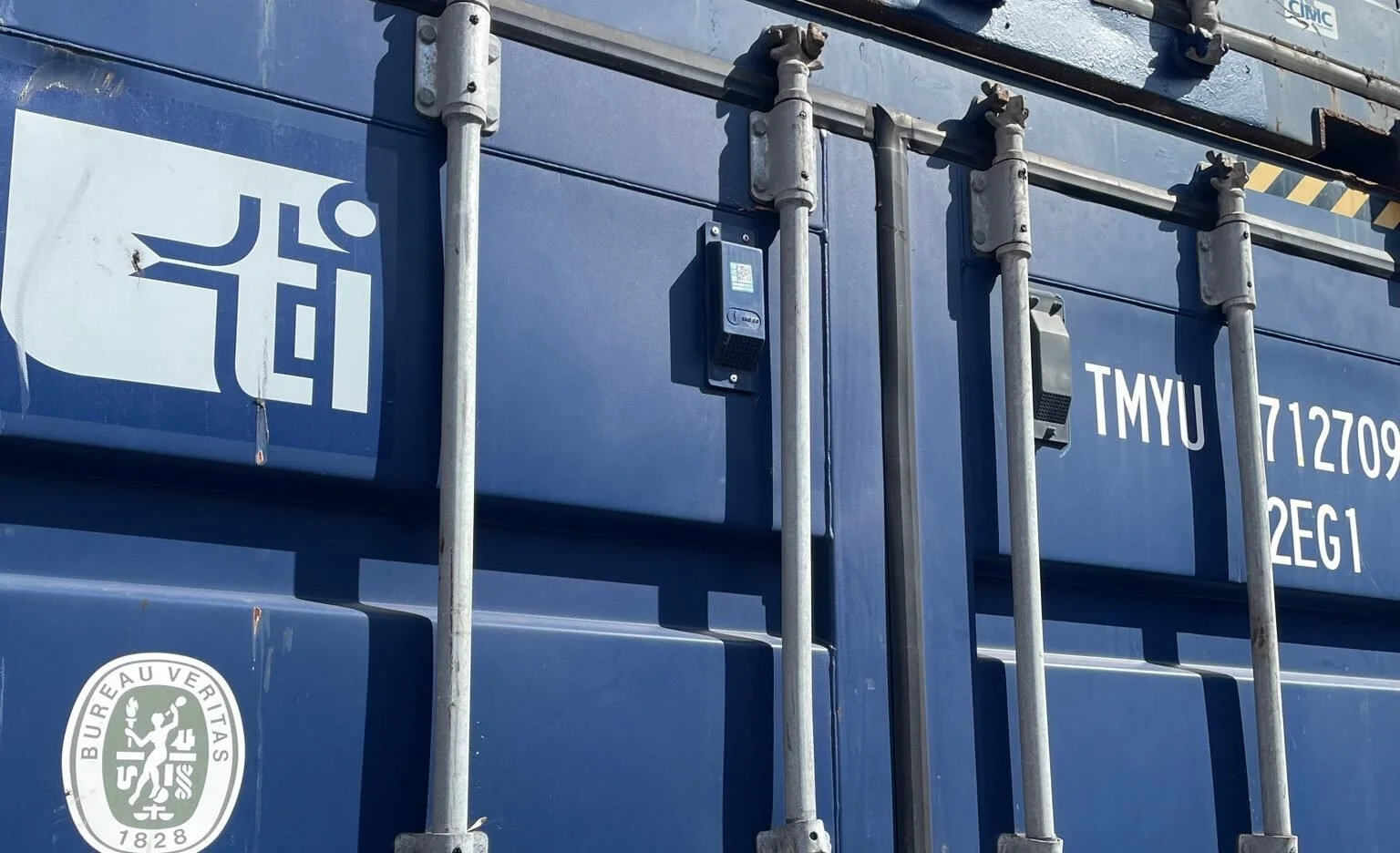
Transinsular, the largest Portuguese maritime cargo shipping company, implemented the Vodafone Smart Container solution to monitor the location and integrity of its containers. This technology was developed by Sensefinity.
The solution was installed in 90% of Transinsular's container fleet, which operates between Mainland Portugal, Azores, Madeira and Cape Verde.
Matthieu Roger, Administrator of Transinsular, explains that “this technology allows Transinsular to optimize the rotation of its containers by 20%”

Read the Executive Digest report.

Fremantle Highway: Electric car fire in car carrier ship

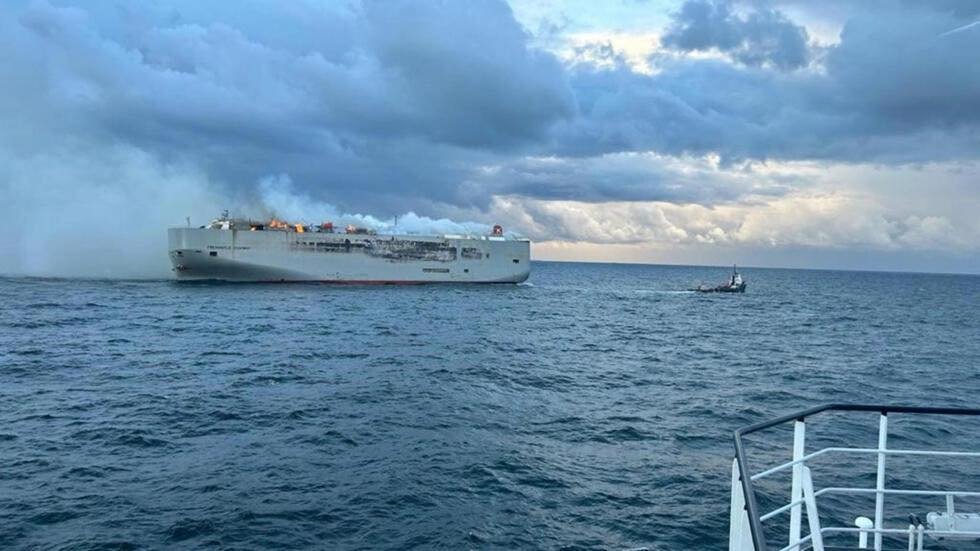
The vessel is carrying electric vehicles and is suspected to be the cause of a deadly fire, prompting an investigation as reported to Dutch media by the ship's owners, Shoei Kisen Kaisha. The car carrier named Fremantle Highway had approximately 3,000 vehicles on board and was en route to Singapore when the fire erupted. The company is currently working with local authorities, salvors, and the ship management company to extinguish the fire. While there is a strong possibility that the fire started with the electric cars on board, the exact cause is yet to be determined pending the investigation.

Rescue operations took place after receiving a fire report about 14.5 nautical miles off the northern Dutch island of Ameland. All 23 crew members were safely evacuated, but unfortunately, one person lost their life, and several others were injured during the incident. The fire is expected to continue burning for some time, and efforts are being made to cool the ship's structure and prevent further damage. The vessel is currently located near the ecologically sensitive islands of Waddensee, raising concerns about potential environmental risks if the ship were to sink.

The Waddensee area is a UNESCO World Heritage Site with a rich diversity of aquatic and terrestrial species, including fish and marine mammals like seals and porpoises. Therefore, preventing any environmental damage is of utmost importance.

The Fremantle Highway is a large car carrier ship, and the injured sailors, mostly from India, have been provided medical attention. Salvage operations are ongoing to minimize the damage and prevent the ship from sinking. The ship has been secured to prevent it from drifting and blocking an important sailing route into Germany.

Fires on car-carrying ships have been a significant concern for insurers, given the potential for substantial losses. A previous incident involved the sinking of the Felicity Ace in the Atlantic Ocean, carrying thousands of vehicles from a German car manufacturer.

Despite the ongoing incident, holidaymakers on Ameland's popular beaches appear unaffected, and authorities are closely monitoring the situation to handle it as effectively as possible.

IoT and maritime sensors can help with the early detection of fires and reduce risk, cost and harm.

https://www.france24.com/en/live-news/20230726-deadly-fire-burning-on-car-transport-ship-off-netherlands

Covid Vaccines and Cold Chain Trouble

covid_vaccines_sensefinity.jpg

Finally the first Covid-19 Vaccines are arriving, but with the new vaccines, complex supply-chain challenges arise.

The new Covid vaccines pose complex supply-chain challenges with regards to storage and transportation and the first news of spoiled vaccines are already arriving.

These challenging supply-chain conditions are the driver for implementing sophisticated cold chain supervision systems.

Sensefinity is using the Internet of Cargo to create real-time visibility and alarming functionalities to avoid spoilage and guarantee that the vaccines arrive at the people in perfect condition.