
safety

The $647,420 Nike Pickup That Looked Legitimate — Until It Wasn’t

A driver arrived at a Memphis facility with documents that appeared sufficient to collect a Dallas-bound shipment of Nike merchandise. The cargo left the dock. But the driver was not completing the authorized movement, the paperwork was fraudulent, and the shipment headed towards the Chicago area instead.

The fictitious pickup happened on 21 August 2026. Nike contacted the Cook County Sheriff’s Police Organized Retail Crime Unit two days later, and investigators ultimately recovered approximately $647,420 in merchandise at a distribution facility in Des Plaines, Illinois, together with a stolen trailer. At the time of the report, no arrests or charges had been announced and the investigation remained active.[1]

This was not a failure of a lock. It was a failure of trust: the wrong person presented documents that looked right long enough for legitimate staff to release valuable cargo.

When a document looks right but custody is wrong

Traditional shipping documents describe an intended transaction. They do not necessarily prove that the person standing at the dock is the person currently authorized to execute it.

A convincing PDF, bill of lading or pickup reference can be copied, altered or generated from compromised information. The Nike incident is especially instructive because the shipment did not first disappear from an unattended parking area. It was handed over at origin after false paperwork made an unauthorized collection appear legitimate.[1]

It also sits within a wider pattern. In a separate Nike case, federal prosecutors alleged that unauthorized UPS labels were used to divert products from the company’s Memphis distribution operation. Reporting on that case describes “ghost labels” covering original shipping labels and redirecting packages to private addresses; those allegations have not been proven in court.[2]

The common weakness is clear: when operational truth lives only in editable labels, emails and documents, whoever can reproduce the appearance of authority may be able to redirect the physical goods.

Blockchain should verify the handover, not archive the fraud

Simply uploading a document to a blockchain is not enough. If false information is accepted at the start, an immutable database only preserves a false statement.

The useful model is different: create a verifiable digital chain of custody and require every physical handover to match its current authorized state. Before a warehouse releases a shipment, the system should be able to answer five questions:

  1. Which exact shipment is being collected? A unique digital identity binds the order, cargo unit, pallet or container to the operational record.

  2. Who is authorized right now? The approved carrier, driver, vehicle and pickup window are recorded by trusted parties, rather than inferred from a document presented at the gate.

  3. Has anything changed? A destination, carrier or collection instruction cannot be silently overwritten. A new authorization becomes a visible, time-stamped event.

  4. Is this handover happening in the expected place and time? A one-time release credential can be bound to the shipment, facility and pickup window.

  5. What happened after release? Independent IoT data confirms departure, movement and route exceptions instead of relying only on status messages from the party holding the load.

In that model, a counterfeit document is no longer the authority. It is merely a claim that must match the shared, verifiable record.

What the Nike pickup could have looked like

Imagine the same collection with digitally verified custody controls.

At the Memphis gate, the operator scans the shipment identifier and the driver’s one-time pickup credential. The system checks both against the latest authorization recorded for that shipment. If the driver, carrier, vehicle, destination or collection window does not match, the cargo is not released and the discrepancy is escalated through a known channel.

If all checks pass, the handover is signed as a new custody event. A cargo-level tracker then confirms when the load leaves the facility. A Dallas-bound shipment moving towards Chicago crosses a route or geofence rule, generating an alert while intervention may still be possible.

The incident report says investigators recovered the Nike merchandise after the diversion was identified.[1] A verified release process could have moved the decisive control point earlier—from recovery after the theft to refusal at the dock. No technology can guarantee prevention, but forged paperwork becomes much less useful when it cannot satisfy the digital authorization and physical-event checks required for release.

Sensefinity connects the record to the real cargo

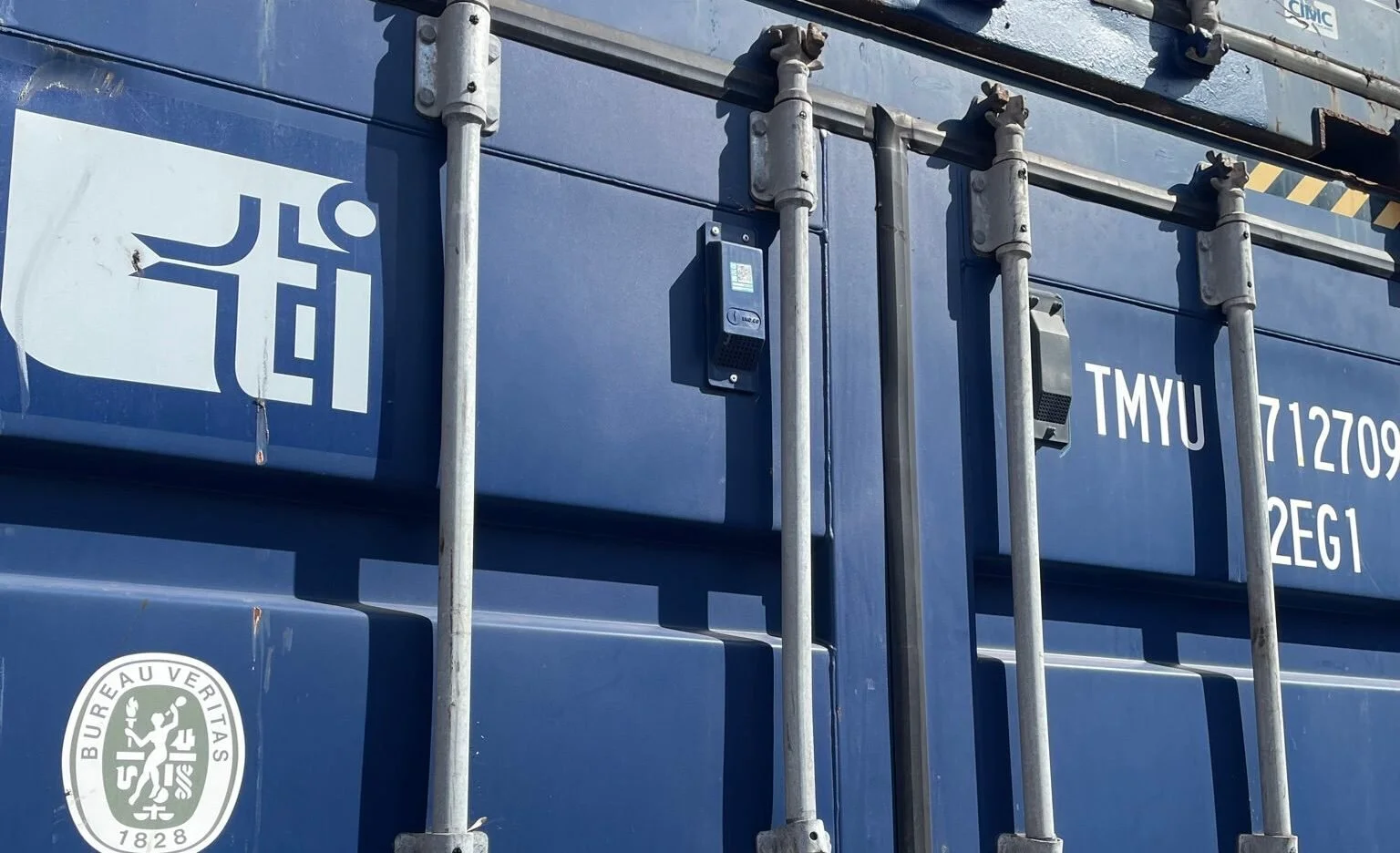
The hard part of supply-chain blockchain is connecting digital claims to physical events. Sensefinity addresses that gap with IoT “oracles”: trackers and sensors that collect cargo location and environmental data, register it in the Sensefinity platform and can also write selected information to a logistics blockchain. Authorized partners can access the shared record without requiring direct access to one another’s internal IT systems.[3]

Our Blockchain solution provides the tamper-evident event layer. Our NB-IoT trackers locate assets on land and at sea and can issue alerts when an asset enters or leaves a configured geofence.[4]

Together, those capabilities support a stronger release and custody process:

  • digitally signed shipment and pickup authorizations;

  • an auditable history of instruction changes;

  • verified handovers between shipper, carrier, warehouse and receiver;

  • cargo-level location evidence independent of the truck or transport paperwork;

  • immediate alerts for unauthorized departure, route deviation or unexpected arrival;

  • a provenance record that follows the goods beyond a single logistics provider.

Trust the verified event, not the convincing document

Fictitious pickup succeeds in the gap between what a document says and what the operation can prove. Closing that gap requires more than checking logos, signatures and reference numbers. It requires a shared source of truth, a controlled handover and independent evidence from the cargo itself.

The $647,420 Nike recovery had a positive outcome. The more important objective for the next shipment is to make forged paperwork fail before the doors close and the truck leaves.

Talk to Sensefinity about combining IoT visibility, geofencing and blockchain-backed chain of custody for high-value cargo.
Sources

  1. $647K Nike cargo recovered near Chicago after fraudulent Memphis pickup — FreightWaves

  2. How Nike insiders were charged in a lucrative sneaker theft conspiracy — Los Angeles Times

  3. Sensefinity Logistics Blockchain

  4. Sensefinity NB-IoT Trackers

When the target is AI hardware: how real-time visibility stops theft and speeds recovery

By Sensefinity — August 29, 2026

Over the past few weeks, cargo theft in the United States has gained a new and extremely expensive target: artificial intelligence hardware. U.S. press reports describe thieves ramming security escorts and hijacking data-center equipment shipments in California, with the so-called "bump and run" tactic costing around $111 million in data-center freight. On another front, rail cargo theft runs at roughly $200 million a year. In Germany, thefts at highway rest areas (A7, A11) and "Planenschlitzer" — tarpaulin slashers — keep the logistics sector on alert.

The pattern is clear: as the value per pallet rises, so does the sophistication of those who steal it. A single pallet of AI accelerators or servers can be worth more than an entire truckload of conventional goods. And once diverted, the equipment disappears into the grey market within hours.

The problem isn't just theft — it's invisibility

The thief's biggest advantage is the supply chain's blindness. Between leaving the warehouse and reaching its destination, cargo passes through hands, trucks, rest areas and depots where almost no one knows exactly where it is, what temperature it is at, or whether it has been opened. When something goes wrong, the first question — "where was the cargo at 3 a.m.?" — often has no answer.

This is where Sensefinity's approach comes in.

Prevent: make theft visible before it happens

Sensefinity uses NB-IoT trackers and smart sensors together with 4G/LTE-M connectivity and AI monitoring to give continuous visibility of what is being moved — containers, pallets or high-value equipment.

  • Real-time location. A tracker fixed to the cargo or pallet reports position independently of the driver and the truck. If the cargo leaves the planned route, or stops at an unauthorized rest area, the system raises an immediate alert.

  • Opening and tamper detection. Door, shock and motion sensors detect when a container or box is opened outside an authorized stop — often before the theft is completed.

  • Geofencing and routes. The AI compares the actual route with the planned one and flags deviations, anomalous stops, or "bump and run" (where the trailer is separated from the tractor).

  • Condition as evidence. Temperature, shock and humidity are recorded continuously, building forensic proof of what happened to the cargo in transit.

The deterrent effect is simple: cargo that "sees and talks" stops being an easy target.

Recover: cut response time from days to minutes

If theft occurs, response speed decides whether the equipment is recovered or resold. Sensefinity trackers stay active even after diversion:

  • Post-theft tracking. As long as the tracker has cellular coverage (NB-IoT/LTE-M), location keeps being reported — often inside the buyer's vehicle or warehouse, not the owner's.

  • Tamper-proof history. Movement, opening and stop events form a timeline that authorities can use to reconstruct the path of the theft.

  • Response integration. Alerts can be routed to security teams or law enforcement, shrinking the time between theft and action.

In a market where AI hardware can be resold within hours, those minutes matter.

Why NB-IoT and LTE-M matter in the field

Low-power, wide-coverage technologies like NB-IoT and LTE-M are ideal for long-haul cargo: they work where ordinary phones fail (underground warehouses, rest areas, rural areas) and draw little battery, enabling weeks of monitoring without recharging. It is exactly the coverage a pallet of servers needs as it crosses a continent.

Conclusion

Theft of AI hardware is not an isolated "physical security" problem — it is an information problem. Whoever knows where the cargo is, in real time, and can prove what happened to it, holds the advantage. Sensefinity turns invisible cargo into trackable cargo, deterring theft at the source and accelerating recovery when something goes wrong.

Because in the new game of high-value logistics, to see is to protect.

Sensefinity — Internet of Cargo. AI- and Blockchain-powered supply chain visibility, from origin to destination.

The Trailer Was Found. The Servers Were Gone: Why High-Value Cargo Needs Item-Level Visibility

A stolen trailer carrying several pallets of server equipment was recovered in Germany within minutes of its original location. The GPS tracker had worked. The trailer had been found.

But the cargo — reportedly worth millions of euros — was already gone.

The incident, reported by VerkehrsRundschau on 2 September 2026, exposes a critical weakness in conventional cargo security: knowing where the vehicle or trailer is does not necessarily tell you where the goods are.

For high-value logistics, visibility must travel with the cargo itself.

What happened in Herzberg am Harz

According to the report, a semi-trailer containing several pallets of server technology was parked in the Aue industrial area of Herzberg am Harz, in Germany’s Göttingen district, on Friday afternoon. The equipment was destined for a data centre and was scheduled for delivery on Monday.

At approximately 21:50 on Sunday, 30 August, thieves allegedly connected the trailer to an unidentified tractor unit and drove it away. When the driver returned early on Monday, the trailer had disappeared.

The transport company used a GPS transmitter to locate it near a recycling facility on Kreisstraße 409. The journey appears to have taken only a few minutes. By the time the trailer was recovered, however, it was empty.

Police found a pallet truck and the trailer’s registration plate near the recovery location. Investigators believe the volume and weight of the missing server equipment may have required several people and one or more additional vehicles.

The estimated loss runs into the millions of euros.

Trailer tracking solved only half the problem

This case is not evidence that GPS tracking is useless. On the contrary, the tracker helped recover the stolen trailer quickly.

It does show the limit of tracking only the transport asset.

A trailer and its load can separate in minutes. Once pallets are transferred to another vehicle, a tracker fixed to the trailer continues to report the location of an empty metal box. The logistics operator may know where the equipment was last transported, but not where it went next.

That distinction matters whenever the cargo is more valuable than the vehicle carrying it. Servers, semiconductors, electronics, pharmaceuticals and other high-value goods require a security model centred on the shipment — not only on the truck or trailer.

Cargo-level visibility changes the response

At Sensefinity, we believe the monitoring architecture should match the value and risk profile of the cargo. For a shipment such as this one, visibility can be layered across the trailer, pallets and, where justified, individual high-value assets.

Smart trackers and sensors can provide:

  • Independent pallet-level location: selected pallets remain visible after being removed from the original trailer.

  • Geofence alerts: an unexpected departure from a loading area, route or approved delivery zone can trigger an immediate warning.

  • Movement and handling events: sensor data can identify unauthorised movement or a transfer occurring outside the planned operation.

  • Environmental monitoring: temperature, humidity and shock data can protect sensitive equipment against damage as well as theft.

  • Exception-based operations: teams receive actionable alerts instead of having to watch dots on a map continuously.

The objective is not simply to collect more data. It is to shorten the interval between an unauthorised event and an operational response.

In a theft completed within minutes, that interval is decisive.

From location history to verifiable chain of custody

Location data becomes more useful when it is connected to shipment identity and custody events.

Who released the cargo? Which vehicle collected it? Was the collection expected? When did custody change? Did the pallet follow the authorised route? Was it delivered to the correct consignee?

Sensefinity combines IoT tracking with a blockchain layer that can register selected logistics events in a tamper-resistant record. Trackers and sensors act as oracles, connecting physical events to the digital ledger. Authorised partners can verify key information without requiring unrestricted access to one another’s internal systems.

For high-value cargo, this creates a stronger evidence trail across shippers, carriers, warehouses and recipients. It can support investigations, claims, compliance and dispute resolution — while making unauthorised substitutions or unexplained custody gaps easier to detect.

A Digital Product Passport can extend that verified identity throughout the asset lifecycle, connecting origin, logistics operators and other product information to a persistent digital record.

A practical layered-security model

No single device can eliminate cargo theft. Effective protection combines physical, operational and digital controls.

For high-value technology shipments, operators should consider:

  1. Tracking the trailer and selected pallets independently.

  2. Creating geofences around loading sites, authorised stops and delivery locations.

  3. Triggering alerts for movement outside approved time windows.

  4. Linking sensor identities to shipment and custody records.

  5. Escalating exceptions to named responders with a documented playbook.

  6. Reviewing where cargo can be transferred quickly and without observation.

  7. Preserving verifiable event data for investigations and insurance claims.

The right configuration depends on shipment value, route, dwell time and threat profile. The important point is that the monitoring plan must follow the risk all the way down to the level at which the cargo can disappear.

Track what creates the value

The trailer in Herzberg was recovered. The multimillion-euro load was not.

That difference captures the challenge facing high-value logistics: asset tracking can locate the container of value without locating the value itself.

Sensefinity’s NB-IoT trackers and smart sensors help organisations monitor cargo on land and at sea, configure geofence and environmental alerts, and connect physical logistics events to trustworthy digital records.

If your organisation transports servers, electronics or other high-value goods, talk to Sensefinity about designing a cargo-level visibility and chain-of-custody strategy.

Primary source: Thomas Burgert, “Unbekannte stehlen Sattelauflieger mit teurer Servertechnik,” VerkehrsRundschau, 2 September 2026. The source reports that the theft occurred on 30 August 2026.

"The Worst I’ve Ever Seen": Cargo Theft Turns Violent in Pursuit of AI Hardware

A cargo investigator with 25 years of experience called it "the worst I’ve ever seen." The words refer to two alleged attacks on high-value technology shipments in California, reported by WIRED on August 12, 2026. In both cases, criminals appear to have targeted the security escort first. One escort vehicle was rear-ended; another was forced into a spin. Once the escorts were immobilised, the trucks continued away from their planned destinations and millions of dollars in data-centre equipment disappeared.

WIRED could not independently confirm every detail because the investigations were still active and identifying information was withheld. Two other cargo-security sources did, however, corroborate elements of the incidents. The reported method matters because it exposes a weakness in conventional transport security: if visibility depends on the vehicle, the driver or an escort, attackers only need to compromise one of them.

AI hardware has changed the economics of cargo theft

Servers, accelerators and other data-centre components concentrate enormous value in a small space. A few pallets can be worth millions and the goods can move quickly through grey markets. That combination attracts organised groups with the resources to conduct surveillance, obtain inside information, impersonate legitimate carriers and coordinate an attack.

Physical escorts remain useful, but these cases show their limits. An escort protects what it can see. It cannot continuously verify the identity of the driver, confirm that each pallet remains inside the trailer or detect that the cargo has been separated from the authorised vehicle.

The security model therefore has to follow the cargo itself.

Track the load, not only the truck

Sensefinity’s Internet of Cargo platform attaches visibility to the shipment through connected trackers and sensors placed on containers, pallets or high-value equipment. The telemetry remains independent of the truck’s onboard system and of the driver’s phone.

If an escort is forced to stop but the shipment keeps moving, the platform can still report the cargo’s position. If the tractor, trailer and pallets separate, cargo-level devices make that separation visible. This closes the blind spot that criminals exploit when they neutralise the people or systems around a load.

Detect the attack while it is happening

Prevention depends on recognising abnormal behaviour early enough to intervene. Sensefinity combines NB-IoT trackers and smart sensors with rules and alerts that can identify events such as:

  • departure from an authorised route;

  • an unscheduled stop or entry into a high-risk area;

  • unexpected motion after a vehicle should be stationary;

  • shock or impact consistent with rough handling or an attack;

  • opening or tampering outside an approved location;

  • separation between tracked cargo and its assigned vehicle.

A security team does not have to wait for a missed delivery or an end-of-shift phone call. It can receive the alert as the deviation happens, check the shipment and escalate to the carrier or law enforcement according to an agreed response plan.

No tracking system can guarantee that a violent attack will not occur. What it can do is remove the anonymity and time advantage on which cargo theft depends. Faster detection makes a theft harder to complete and improves the chance of recovery before the goods are broken up or resold.

Verify who had custody

The WIRED report also raises the possibility of driver involvement. That risk cannot be solved by location data alone. High-value transport needs a verifiable chain of custody: who collected the load, which vehicle was assigned, when custody changed and whether the route and handover matched the plan.

Sensefinity can record shipment events in a blockchain-backed logistics trail. This creates an auditable history that is harder to alter after an incident. Combined with authorised pickup identities and cargo-level sensor data, it helps operators detect a fictitious collection, an unauthorised handover or a route that no longer matches the shipment’s instructions.

Build security around response time

For high-value AI hardware, a useful security programme should define more than a tracker installation. It should specify:

  1. which assets are tracked at trailer, pallet and item level;

  2. the approved route, stops and handover points;

  3. alert thresholds for route deviation, opening, shock and separation;

  4. who receives each alert and how quickly they must respond;

  5. how location and custody evidence is shared with investigators.

Sensefinity brings those signals into one cargo-monitoring view. Operators can see where the shipment is, whether it has followed the authorised journey and whether anything happened to it in transit. The goal is practical: identify the first sign of interference, act before the cargo disappears and preserve reliable evidence if an incident still occurs.

The attacks described by WIRED show that guarding the vehicle is no longer enough. When criminals plan around the escort, security must stay with the cargo.

Sources

Theft is only half the risk: cold chain and provenance now decide cargo losses

By Sensefinity — August 29, 2026

For years, cargo risk meant one thing: would the shipment arrive? In 2026, the question has split in two. Beyond theft, operators now worry about whether the cargo arrived intact and whether it is genuinely what the paperwork claims. Two trends in this week's loss reports show why.

Cold chain under attack

Travelers and Food Logistics (2026) are now explicitly warning about theft and protection of refrigerated cargo. Stolen temperature-sensitive freight — food, pharmaceuticals, vaccines — is not just lost; it is spoiled the moment it sits in a warm trailer. The product the thief resells may already be unsafe, and the owner is left with a liability, not just a loss.

This is where continuous temperature monitoring changes the equation. A Sensefinity tracker logs cold-chain condition — temperature, shock, humidity — throughout transit, not just at the dock. If a reefer is opened, diverted or left running hot, the breach is recorded in real time. That turns "we assumed it stayed cold" into "we can prove it did — or didn't."

Provenance: the counterfeit problem

The second trend is fraud of origin. Europol has seized counterfeit food and beverages; in Portugal alone, more than 1,400 counterfeit items were intercepted in parcels in the Algarve, 12 tonnes of KitKat vanished across Europe, and national authorities confiscated 1.2 million counterfeit products in a year. Counterfeit goods ride the same logistics lanes as legitimate cargo — and once mixed in, they are nearly impossible to tell apart by sight or paper.

A Digital Product Passport anchored in blockchain lets each high-value unit carry verifiable proof of origin: where it was made, by whom, and through which hands it passed. At any stop, a scan confirms the item is the genuine article — and flags the one that isn't. For pharma, food and luxury goods, that distinction is the difference between a safe shipment and a recall.

"Fewer thefts, higher value"

Both trends sit inside a wider shift the industry keeps reporting: thieves are attempting fewer, higher-value hits. Verisk CargoNet's Q2 2026 data showed theft value climbing even as incident counts moved; Overhaul rates cargo theft a high risk for the second half of 2026. When the target is a pallet of medicine, a crate of premium food or a batch of branded goods, the loss isn't just the unit price — it's spoilage, counterfeiting and the erosion of trust.

What visibility changes

Sensefinity combines both defenses in one layer of supply-chain visibility:

  • Cold-chain proof. Sensefinity’s NB-IoT trackers and smart sensors record temperature, shock and humidity continuously, so condition is known at every handoff, not assumed.

  • Tamper and opening detection. Door and motion sensors flag unauthorized access before the product is compromised.

  • Blockchain provenance. A Digital Product Passport makes origin verifiable at any point in the chain, separating genuine cargo from diverted or counterfeit goods.

  • Real-time alerts. Deviations, breaches and anomalies reach security teams or authorities while there is still time to act.

Conclusion

Cargo risk in 2026 is no longer just "will it be stolen." It is "will it arrive cold, and will it be real." Theft, spoilage and counterfeiting are the same problem seen from three sides — and the same answer applies to all three: visibility you can trust, from origin to destination.

Because in high-value logistics, to see is to protect — and to prove.

Sensefinity — Internet of Cargo. AI- and Blockchain-powered supply chain visibility, from origin to destination.

Samsara’s 30% Growth Sends a Clear Signal: Tracking Is Becoming Essential Infrastructure

On 3 September 2026, Samsara reported a quarter that should make every logistics leader pay attention. Revenue reached $508.4 million, up 30% year over year, while annual recurring revenue crossed $2.1 billion, also growing 30%. The company added a record 242 customers spending more than $100,000 annually and 20 customers above $1 million.[1]

The important story is larger than one company’s earnings. These numbers are evidence of a structural change: connected operations, real-time visibility and AI based on physical-world data are moving from optional tools to essential infrastructure.

For Sensefinity, this is a strong market signal. We focus specifically on the cargo itself—containers, pallets, crates, temperature-sensitive goods and other valuable assets. As enterprises invest more deeply in connected operations, the need for cargo-level intelligence grows with them.

Enterprises are no longer buying isolated trackers

Samsara’s results show that large organizations increasingly want a common operational data layer. Among its customers generating more than $100,000 in annual recurring revenue, 96% use at least two products and 72% use at least three. Emerging products accounted for more than 20% of net new annual contract value for the third consecutive quarter.[1]

That pattern matters. Companies are not simply buying a dot on a map. They are connecting vehicles, equipment, sites and workflows so they can detect risk, automate decisions and improve performance across the operation.

Tracking is becoming the foundation for several outcomes at once:

  • knowing where vehicles, equipment and cargo are;

  • detecting delays, deviations and unauthorized movements;

  • protecting temperature-sensitive or high-value goods;

  • reducing manual status checks and fragmented spreadsheets;

  • feeding AI with reliable, real-time operational context;

  • creating evidence for compliance, insurance and customer service.

The market is shifting from “Where is my truck?” to “What is happening to every critical asset, and what should we do next?”

AI needs real-world data before it can create value

Samsara said adoption of some of its newest AI features increased more than fourfold in two months. Its platform now collects more than 30 trillion data points annually, up more than 40% year over year.[1]

This highlights a basic truth about physical AI: algorithms cannot improve an operation they cannot see.

A useful AI system needs current information from the field—position, movement, temperature, humidity, shock, dwell time, route changes and custody events. Without sensors and connected assets, AI is left working with delayed reports and incomplete assumptions. With live data, it can identify exceptions, forecast risk and recommend action while the outcome can still be changed.

Sensefinity applies that principle to supply chains. Our approach combines trackers and sensors with analytics, alerts and AI so organizations can learn from physical operations and react to events in real time.[5]

The cargo—not only the vehicle—must be connected

Fleet visibility solves an important part of the problem, but a vehicle and its cargo are not the same asset.

A trailer can be located after pallets have been removed. A truck can arrive on time while refrigerated products have experienced a damaging temperature excursion. A container can follow the planned route while an individual high-value item is substituted, opened or diverted during a handover.

That is where Sensefinity’s specialization becomes important. The Internet of Cargo connects the goods themselves and makes supply chains context-aware. Sensefinity provides real-time tracking, condition monitoring, operational alarms and KPIs across logistics operations.[4]

Our NB-IoT trackers and sensors can be attached to containers, pallets and crates. They support asset location, configurable geofence alerts, temperature and humidity thresholds, datalogging and long-life operation for use cases where continuous charging is impractical.[2]

This cargo-level layer complements fleet and connected-operations platforms. It closes the visibility gap between the movement of the vehicle and the condition, identity and custody of what the customer is actually paying to transport.

Why demand for tracking continues to rise

Several forces are reinforcing one another.

Supply chains are more valuable. Servers, electronics, pharmaceuticals, specialized components and premium food can concentrate enormous value in one shipment.

Exceptions are more expensive. A few hours of delay, an unnoticed temperature breach or an unauthorized transfer can turn a successful delivery into a write-off, recall or insurance claim.

Customers expect proof. “Delivered” is no longer enough. Companies increasingly need evidence of route, condition, origin and custody.

AI adoption increases the value of sensors. Every useful prediction depends on timely, trustworthy data from the physical operation.

Enterprises want fewer blind spots. As connected platforms expand across vehicles and sites, unconnected cargo becomes the missing part of the digital picture.

Samsara’s growth quantifies this wider appetite for visibility. Sensefinity is growing in the same demand environment, with a focused proposition for organizations that need intelligence at container, pallet and product level.

Sensefinity’s opportunity: deeper visibility and trusted data

Samsara’s financial performance is not a measure of Sensefinity’s revenue, and the companies operate at very different scales. What it validates is the category: organizations are allocating more budget to technology that connects physical operations and turns live data into action.

Sensefinity extends that value through cargo-specific capabilities and a blockchain layer. Data collected by trackers and sensors—including location, temperature, humidity and shock—can be registered in the logistics blockchain to create a more trustworthy record across partners.[3]

That combination supports a broader progression:

  1. Connect the cargo with the appropriate tracker and sensors.

  2. Detect exceptions through real-time alerts and configured thresholds.

  3. Learn and forecast using AI and operational history.

  4. Share trusted evidence across selected supply-chain partners.

  5. Act earlier to prevent waste, theft, delays and quality failures.

This is why the growth of connected operations is relevant to Sensefinity. The more enterprises digitize vehicles, equipment and workflows, the clearer the need becomes to connect the cargo moving between them.

A market signal worth acting on

Thirty-percent growth at more than $2.1 billion in recurring revenue is not a niche technology story. It is evidence that visibility, sensors and physical AI are becoming part of how modern operations are built.[1]

The next stage is to make that visibility more granular: from fleets to trailers, from trailers to containers, from containers to pallets and, where the value or risk demands it, from pallets to individual products.

That is the growth path for the Internet of Cargo—and it is where Sensefinity is building.

Talk to Sensefinity about connecting your cargo, monitoring its condition and turning physical operations into trusted, actionable data.

Sources

[1] Samsara, “Samsara Crosses $2.1 Billion in ARR as Large Enterprises Standardize on Its Platform,” 3 September 2026: https://www.samsara.com/company/news/press-releases/q2-fiscal-year-27-results

[2] Sensefinity, “NB-IoT Trackers”: https://www.sensefinity.com/nbiot-trackers

[3] Sensefinity, “Blockchain”: https://www.sensefinity.com/blockchain

[4] Sensefinity, “Internet of Cargo”: https://www.sensefinity.com/internet-of-cargo

[5] Sensefinity, “AI for Supply Chains”: https://www.sensefinity.com/ai-for-supply-chains

Vodafone installs Sensefinity solution at the largest Portuguese maritime cargo shipping company

Transinsular, the largest Portuguese maritime cargo shipping company, implemented the Vodafone Smart Container solution to monitor the location and integrity of its containers. This technology was developed by Sensefinity.
The solution was installed in 90% of Transinsular's container fleet, which operates between Mainland Portugal, Azores, Madeira and Cape Verde.
Matthieu Roger, Administrator of Transinsular, explains that “this technology allows Transinsular to optimize the rotation of its containers by 20%”

Read the Executive Digest report.

Fremantle Highway: Electric car fire in car carrier ship

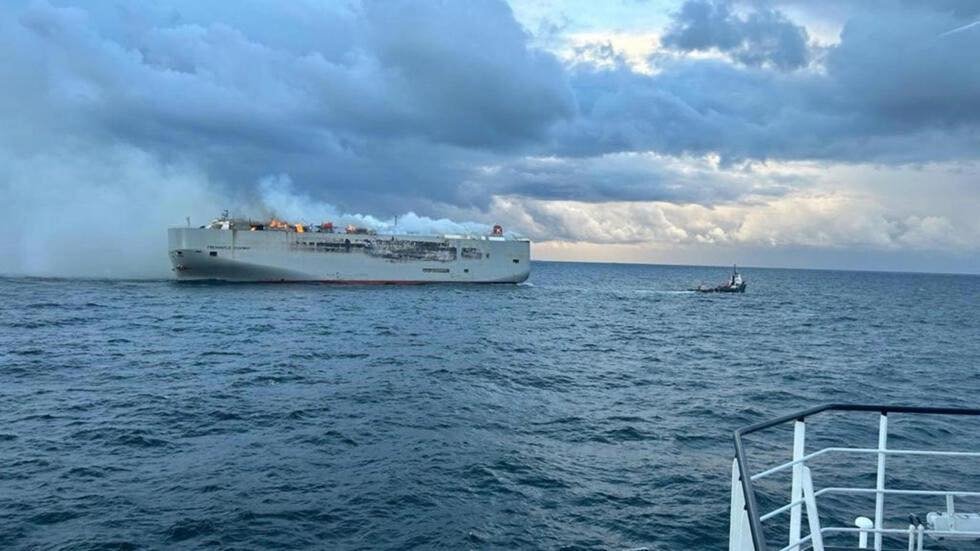
The vessel is carrying electric vehicles and is suspected to be the cause of a deadly fire, prompting an investigation as reported to Dutch media by the ship's owners, Shoei Kisen Kaisha. The car carrier named Fremantle Highway had approximately 3,000 vehicles on board and was en route to Singapore when the fire erupted. The company is currently working with local authorities, salvors, and the ship management company to extinguish the fire. While there is a strong possibility that the fire started with the electric cars on board, the exact cause is yet to be determined pending the investigation.

Rescue operations took place after receiving a fire report about 14.5 nautical miles off the northern Dutch island of Ameland. All 23 crew members were safely evacuated, but unfortunately, one person lost their life, and several others were injured during the incident. The fire is expected to continue burning for some time, and efforts are being made to cool the ship's structure and prevent further damage. The vessel is currently located near the ecologically sensitive islands of Waddensee, raising concerns about potential environmental risks if the ship were to sink.

The Waddensee area is a UNESCO World Heritage Site with a rich diversity of aquatic and terrestrial species, including fish and marine mammals like seals and porpoises. Therefore, preventing any environmental damage is of utmost importance.

The Fremantle Highway is a large car carrier ship, and the injured sailors, mostly from India, have been provided medical attention. Salvage operations are ongoing to minimize the damage and prevent the ship from sinking. The ship has been secured to prevent it from drifting and blocking an important sailing route into Germany.

Fires on car-carrying ships have been a significant concern for insurers, given the potential for substantial losses. A previous incident involved the sinking of the Felicity Ace in the Atlantic Ocean, carrying thousands of vehicles from a German car manufacturer.

Despite the ongoing incident, holidaymakers on Ameland's popular beaches appear unaffected, and authorities are closely monitoring the situation to handle it as effectively as possible.

IoT and maritime sensors can help with the early detection of fires and reduce risk, cost and harm.

https://www.france24.com/en/live-news/20230726-deadly-fire-burning-on-car-transport-ship-off-netherlands