
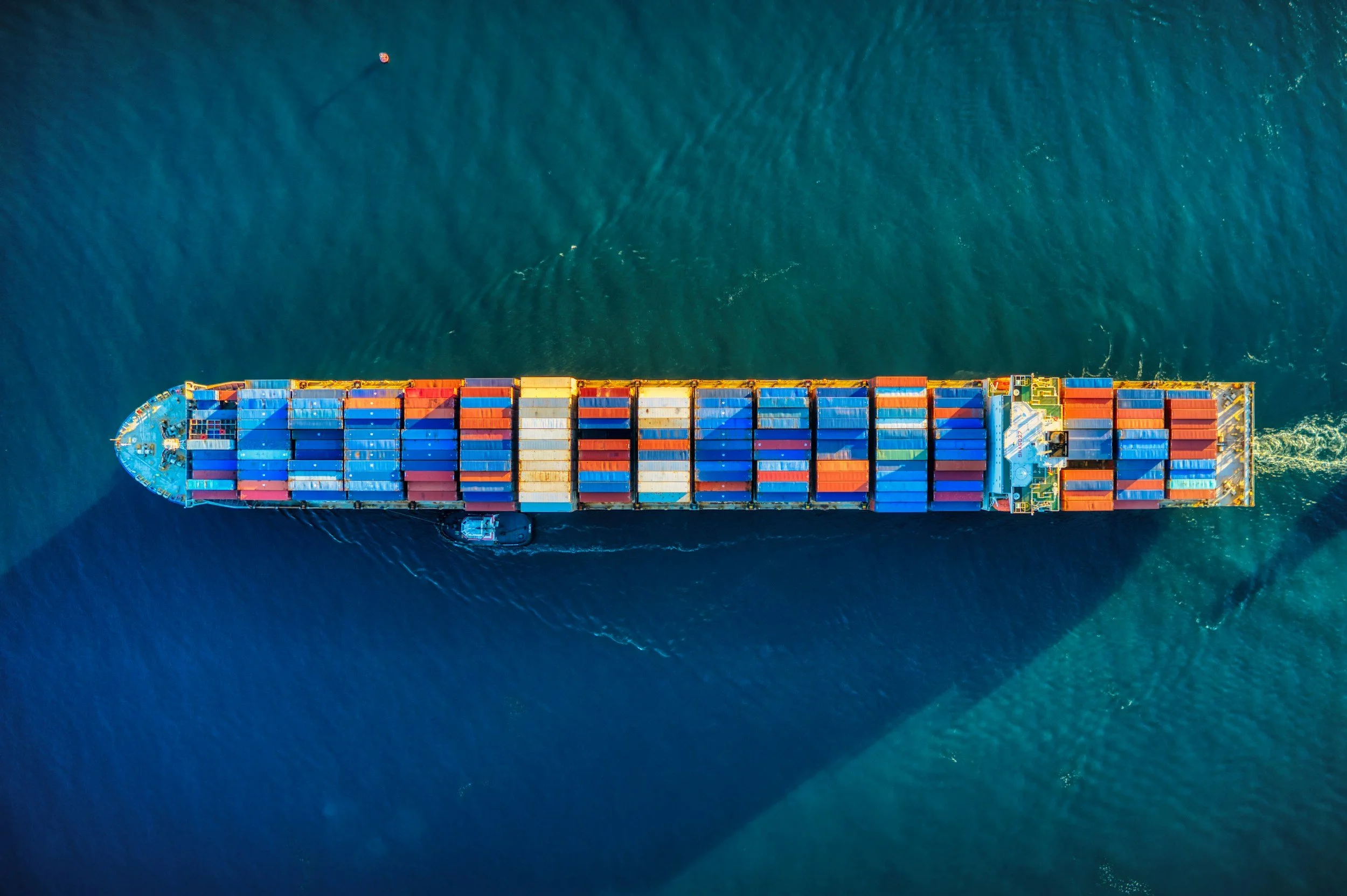
Shipping container IoT turns a standard container into a connected asset that can report where it is, what conditions it experiences and when an exception needs attention. Instead of relying only on manifests, milestones and manual status updates, logistics teams can use sensor data to follow the container and its cargo across road, rail, ports and maritime routes.
The objective is not to collect more data for its own sake. It is to identify the events that matter: an unexpected route deviation, excessive dwell time, a temperature excursion, a severe impact or a door event outside an authorised location.
What is shipping container IoT?
A shipping container IoT system combines four elements:
A tracking device attached to or integrated into the container.
Sensors that measure location and relevant physical conditions.
Connectivity suited to the routes where the container operates.
A platform that converts raw readings into maps, alerts, history and operational reports.
The result is commonly called a smart container. Existing fleets do not necessarily need to be replaced. A retrofit tracker can add digital visibility to a conventional dry or reefer container while preserving normal handling processes.
Which data can a connected container provide?
The useful sensor set depends on the cargo, route and risk model. Common measurements include:
Location: GPS or network-assisted positioning for route and milestone visibility.
Temperature: detection of excursions, refrigeration problems and abnormal heat trends.
Humidity: identification of conditions that can contribute to condensation, corrosion or product degradation.
Impact and movement: evidence of rough handling, drops or unusual vibration.
Door-related activity: detection or logging of opening events, depending on the device configuration.
Time and dwell: calculation of how long a container remains at a port, terminal, depot or customer site.
A reading becomes operationally valuable when it is connected to context. A door opening at an authorised warehouse may be expected; the same event at an unplanned location may require investigation. A temperature reading should likewise be evaluated against the cargo specification rather than a universal threshold.
Real-time alerts instead of delayed discovery
Traditional container workflows often confirm a problem after arrival. By then, the team may know that cargo was damaged or delayed but not where the incident began.
Shipping container IoT can move the response closer to the event. Teams can configure geofences around ports and depots, monitor route progress and receive alerts for defined exceptions. This can support faster decisions such as contacting a carrier, checking refrigeration equipment, documenting a handling incident or updating a customer before the scheduled delivery time.
Alerts should remain selective. Too many notifications create alarm fatigue and make the important exceptions harder to see. A practical deployment begins with the few events that have a clear owner and response procedure.
Tracking containers on land and at sea
No single connectivity technology is ideal for every stage of an international route. Cellular IoT, including NB-IoT and LTE-M where available, can provide efficient communication on land. Maritime coverage may require store-and-forward operation, coastal reconnection or satellite-capable connectivity, depending on the service and hardware selected.
Sensefinity combines container tracking for maritime operations with options such as 5G satellite tracking. The correct architecture depends on the route, reporting frequency, battery-life target and urgency of each event.
For example, an operator may require frequent updates near ports, lower-frequency status reports during normal transit and immediate transmission of a critical exception whenever connectivity is available. Designing these rules deliberately is more effective than requesting the maximum reporting rate everywhere.
Retrofitting existing shipping containers
A useful shipping container IoT design should fit normal fleet operations. Installation time, device placement, weather resistance, battery replacement and maintenance are as important as the dashboard.
Sensefinity's approach can integrate a tracker into a container vent hood, making it possible to retrofit a regular container without purchasing a specialised container fleet. The location also helps the device remain unobtrusive from the outside.
Before rollout, operators should validate:
whether the device fits the relevant container types;
how it affects inspection and maintenance routines;
expected battery life under the chosen reporting policy;
connectivity on representative routes;
sensor calibration and acceptable tolerances;
who owns each alert and escalation step;
how device identity maps to container and shipment identity.
Dry containers, reefers and high-value cargo
The same platform can support different use cases, but the configuration should reflect the cargo.
Dry containers
For general cargo, priorities often include location, dwell time, route deviation, impact and unauthorised access indicators. Historical data can help identify recurring delays or handling points associated with damage.
Reefer containers
For temperature-sensitive cargo, independent sensing can provide an additional record of the conditions experienced by the shipment. It can highlight temperature or humidity excursions and support earlier investigation of a possible cold-chain problem. It does not replace the reefer controller, maintenance or food and pharmaceutical quality procedures.
Sensefinity also provides dedicated cold-chain monitoring for condition-sensitive logistics.
High-value and sensitive cargo
Electronics, industrial components and other high-value goods may require tighter geofences, more frequent reporting near transfer points and a documented response to unexpected door or movement events. The system can provide evidence and faster awareness, but it does not by itself prevent theft or replace physical security.
From dots on a map to operational decisions
A map is useful, but the larger return comes from integrating container data into daily workflows. Examples include:
updating estimated arrival and customer communication;
identifying excessive dwell before demurrage grows;
prioritising containers with condition exceptions;
comparing routes, terminals or carriers using consistent event data;
documenting temperature and handling history for claims or quality review;
locating available containers and improving fleet utilisation.
The UN/CEFACT White Paper on Smart Containers describes the role of real-time smart-container data in supply-chain processes and data exchange. Interoperability matters because container events may need to serve shippers, carriers, ports, customs, insurers and cargo owners without creating a separate data silo for every participant.
How to plan a shipping container IoT pilot
A focused pilot can answer operational questions before a fleet-wide deployment.
Choose a measurable problem. Examples include unplanned dwell, missing visibility between two ports or temperature excursions on one lane.
Select representative routes and containers. Include the conditions that are hardest for connectivity and installation.
Define event rules. Decide which thresholds, geofences and reporting intervals matter.
Assign owners. Every critical alert should have a person or team responsible for action.
Measure outcomes. Compare visibility gaps, response time, unresolved exceptions and manual status work before and during the pilot.
Review false alarms and missing events. Adjust thresholds before scaling.
Plan integration. Decide how the data will connect to transport, warehouse, ERP or customer systems.
A pilot should test the complete workflow, not only whether a tracker can transmit a position.
Frequently asked questions
Can existing containers become smart containers?
Yes. Retrofit devices can add tracking and sensing to existing containers. The installation method must be validated for the container design, operating environment and maintenance process.
Does container tracking work while the vessel is at sea?
It depends on the selected connectivity. Some devices store data and transmit it when coverage returns; satellite-capable solutions can provide broader communication. Route coverage, reporting frequency and service availability should be confirmed during the pilot.
What can shipping container IoT monitor?
Typical options include location, temperature, humidity, impact, movement and door-related events. Available measurements depend on the specific tracker and sensor configuration.
How long can a container tracker operate?
Battery life depends on the device, radio technology, signal conditions, sensors and reporting frequency. A realistic estimate requires the intended route and alert policy rather than a single universal figure.
Is IoT tracking a replacement for cargo insurance or security?
No. It can improve visibility, provide event history and support a faster response, but it does not eliminate operational risk or replace insurance, seals, inspections, physical security and carrier procedures.
Build visibility around the decisions that matter
Shipping container IoT is most valuable when it makes exceptions visible early enough for someone to act. The right deployment combines robust hardware, route-appropriate connectivity, meaningful sensor rules and a clear operational response.
Sensefinity has monitored thousands of connected containers and can help define a pilot around your routes, cargo and risk priorities. Explore Sensefinity's maritime container tracking or contact the team to discuss a specific use case.