sustainability

EPCIS in 2026: The State of Supply Chain Event Data

Supply chains have no shortage of data. They have a shortage of data that different companies can interpret in the same way.

That is the problem EPCIS was built to solve. GS1 describes EPCIS as its flagship standard for sharing the what, when, where, why and how of products and assets across organisations. EPCIS 2.0 extends that event model to sensor readings, certifications, JSON/JSON-LD, REST interfaces and GS1 Digital Link identifiers.[1]

This report assesses where the standard stands in 2026, what is driving implementation, and where projects still break down. It is a desk-research snapshot, not a vendor adoption survey. Our evidence comes from current GS1 specifications and public regulatory material.

The 2026 snapshot

Signal What the evidence says Industry implication Standard maturity EPCIS 2.0 was ratified in June 2022; its implementation guideline followed in March 2023 and the GS1 EPCIS Sandbox launched in February 2024.[1] The technical foundation is established. The main risk has moved from specification maturity to implementation discipline. Condition data EPCIS 2.0 can carry timestamped sensor data, including readings used in cold chains and industrial IoT.[1] Location events and temperature evidence can travel in one interoperable event stream. Certification data The standard supports certification details associated with products, organisations, locations, harvests and shipments.[1] Compliance evidence can be linked to the event where it matters rather than stored in an isolated document repository. API accessibility JSON/JSON-LD and REST capture/query interfaces are part of EPCIS 2.0.[1] Integration no longer has to start with XML-heavy, batch-only architecture. Regulatory pull The FDA Food Traceability Rule requires covered actors to retain Key Data Elements linked to Critical Tracking Events and provide requested information to FDA within 24 hours.[2] Regulated traceability is becoming an event-data problem, even where the law does not mandate EPCIS by name. DPP convergence The EU Digital Product Passport is being introduced progressively and will carry lifecycle, origin, material and environmental information for selected product groups.[11] Product master data and supply chain events will increasingly need a common identity layer.

Our finding: EPCIS covers five evidence layers, but governance remains outside the standard

We reviewed EPCIS 2.0 against five practical evidence layers required by modern cargo and product programmes.

Evidence layer EPCIS 2.0 coverage What still has to be designed Identity Native support through GS1 identifiers and Digital Link URI syntax.[1] Identifier ownership, granularity and partner onboarding. Business events Native event model for status, movement, transformation, aggregation and chain of custody.[1] A shared event vocabulary and rules for late or corrected events. Physical condition Native sensor-data support.[1] Device calibration, sampling frequency, alert thresholds and proof that a sensor remained attached to the cargo. Claims and certifications Native certification fields.[1] Who may issue a claim, how it expires and how it is revoked. Exchange JSON/JSON-LD and REST interfaces.[1] Access control, commercial permissions, retention and cross-company service levels.

The conclusion is useful because it separates a standards question from an operating-model question. EPCIS can express all five layers. It cannot decide which partner is trusted, how often a sensor should report, who pays for data retention or which event wins when two systems disagree.

Regulation is pushing companies toward event-level traceability

The strongest implementation pressure is no longer a generic promise of visibility. It is the need to reconstruct specific product histories quickly.

The FDA's Food Traceability Rule applies additional recordkeeping to foods on the Food Traceability List. Covered organisations must associate Key Data Elements with Critical Tracking Events and be able to provide the information to FDA within 24 hours or another agreed period.[2] GS1's own food-safety guidance maps GTIN, GLN and EPCIS event data to this need for product, location and movement records.[18]

The compliance date was originally January 20, 2026. FDA subsequently proposed a 30-month extension to July 20, 2028, and Congress directed the agency not to enforce the rule before that date.[2] That extension is preparation time, not a reason to postpone architecture. Partner identifiers, event semantics and exception workflows usually take longer than the API connection.

Europe is creating a second source of pressure. Under the Ecodesign for Sustainable Products Regulation, Digital Product Passports will be introduced through product-specific rules. The Commission lists batteries first, followed by product groups such as textiles, iron and steel, construction products and others.[8][11] A passport tells stakeholders what a product is and what must be known about it. EPCIS can supply the time-ordered operational evidence of what happened to it.

The adoption gap is not capture. It is continuity.

Most pilots can generate a shipping event. Far fewer can maintain a trustworthy history through repacking, consolidation, subcontracted transport and handover to another platform.

Four gaps appear repeatedly:

  1. Identity breaks at aggregation. A pallet identifier is recorded, but the link between item, case, pallet and container is incomplete.

  2. Condition data lacks business context. A temperature reading exists, but the system cannot say which shipment leg, custody holder or product lot it belongs to.

  3. Partners use different event meanings. "Received" may mean arrival at the gate, unloading, quality acceptance or ERP posting.

  4. Corrections are not governed. Event histories need a controlled way to handle duplicates, delayed data and amended records without erasing the audit trail.

EPCIS has the structures needed to address these problems. Implementers still need to agree on the operating rules.

A practical 90-day EPCIS readiness test

A company does not need a multi-year transformation programme to learn whether its data is ready. A useful first test follows one real shipment and asks five questions:

  • Can every tracked object and logistics unit be identified consistently?

  • Can the business record packing, shipping, receiving and transformation events using shared vocabulary?

  • Can sensor readings be tied to the correct object, place and time?

  • Can one external partner query only the events it is authorised to see?

  • Can the team reconstruct the shipment history without manually joining spreadsheets?

If any answer is no, the pilot has identified a concrete interoperability gap. That is more valuable than a polished dashboard built on ambiguous data.

Where Sensefinity fits

Sensefinity already supports EPCIS supply chain events and can combine them with location, temperature and humidity data. Our NB-IoT trackers create observations from the physical journey; EPCIS gives those observations a shared business context.

The result is not simply another track-and-trace screen. It is an event history that can be exchanged with customers, suppliers and compliance systems without forcing every participant into the same application.

What to watch next

During the next implementation cycle, three developments deserve attention:

  • convergence between EPCIS event histories and Digital Product Passport records;

  • practical use of sensor and certification fields beyond proof-of-concept projects;

  • partner governance, especially access rights, event correction and long-term availability.

The standard is ready enough. The differentiator in 2026 is whether companies can keep identity, condition and custody evidence connected after cargo leaves their own system.

Methodology and limitations

This report was prepared on September 5, 2026 from public GS1, FDA and EU sources. The readiness matrix is Sensefinity's analysis of features documented in EPCIS 2.0; it is not an adoption-rate survey. We found no authoritative global count of production EPCIS 2.0 deployments and have not invented one.

Sources

[1] https://www.gs1.org/standards/epcis — EPCIS & CBV | GS1 [2] https://www.fda.gov/food/food-safety-modernization-act-fsma/fsma-final-rule-requirements-additional-traceability-records-certain-foods — FSMA Food Traceability Rule | FDA [8] https://eur-lex.europa.eu/legal-content/EN/TXT/?uri=CELEX%3A32024R1781 — Regulation (EU) 2024/1781 (ESPR) [11] https://single-market-economy.ec.europa.eu/single-market/digital-product-passport_en — Digital Product Passport | European Commission [18] https://gs1.org/public-policy/leveraging-GS1-standards-to-meet-key-food-safety-challenges — Leveraging GS1 standards for food safety | GS1

Fewer Thefts, Twice the Losses: The $304.6 Million Visibility Gap

Cargo theft incidents fell in the second quarter of 2026. The financial damage did not.

Verisk CargoNet documented 677 supply-chain theft incidents across the United States and Canada in Q2 2026, down 26% from the same quarter a year earlier. Yet estimated losses rose from $135.7 million to $304.6 million. Among incidents with a reported commodity value, the average reached $564,009.

This is not a contradiction. It is a warning: organized groups do not need to steal more freight when they can identify and divert the right freight.

For shippers of enterprise technology, metals, pharmaceuticals, food and other high-value goods, the new risk is concentration. A single compromised shipment can now erase the benefit of dozens of successful deliveries.

The shipment has become the target

CargoNet’s analysis points to continued targeting of enterprise computer equipment, networking components, cryptocurrency-mining hardware and industrial metals. These goods often travel through conventional logistics networks even when the value inside a trailer reaches several million dollars.

That creates a dangerous mismatch: extraordinary cargo protected by ordinary visibility.

A transport-management system may confirm that a truck was assigned. A carrier portal may show that a delivery is in progress. Neither necessarily proves that the valuable pallet is still with the expected vehicle, following the authorized route or remaining under the correct custody.

The distinction matters because modern cargo theft is increasingly strategic. CargoNet reports that business-email compromise and shipment misdirection remain important access points. Criminals can use a compromised account to identify valuable loads, impersonate trusted parties and alter shipment instructions while appearing legitimate.

In that environment, tracking the journey only at dispatch and delivery leaves too much time—and too many handovers—unobserved.

From vehicle visibility to cargo visibility

The answer is not one more status call. It is an independent data layer attached to the asset that matters.

Sensefinity’s NB-IoT trackers and sensors are designed to locate assets on land and at sea, record environmental conditions and generate alerts when an asset enters or leaves a configured geofence. Depending on the use case, the monitored asset can be a container, a pallet, a crate or the cargo itself.

This changes the security model in four practical ways:

  • Independent location: the shipment can report its own position instead of relying only on the tractor, trailer or driver’s phone.

  • Geofence alerts: an unexpected departure from an authorized corridor, yard or destination can be flagged while intervention is still possible.

  • Condition monitoring: temperature and humidity thresholds help reveal whether sensitive cargo remained within specification during a diversion or delay.

  • Datalogging and auditability: a continuous history gives operations, insurers and investigators evidence of where the asset moved and under which conditions.

No single technology prevents every theft. Carrier verification, access controls, secure communications and trained people remain essential. Cargo-level IoT complements those controls by reducing the period in which a diverted shipment is invisible.

Why response time determines recovery

High-value cargo moves quickly after a successful theft. Loads may be transferred, split, relabelled or routed into established resale channels. The longer a shipper waits to discover a deviation, the less useful yesterday’s location becomes.

Real-time alerts turn detection into an operational event rather than a reconciliation problem. If an asset exits a planned geofence or fails to arrive where expected, the shipper can investigate immediately, preserve the movement history and share actionable information with security partners.

The goal is not simply to know that a loss occurred. It is to know soon enough to change the outcome.

Proof across every handover

Location answers “where?” High-risk supply chains must also answer “what happened?” and “who had custody?”

Sensefinity’s IoT data can also be registered in a logistics blockchain, creating a traceable record of location and environmental conditions such as temperature, humidity and shock. This combination links physical events to a shared digital history.

For insurers and cargo owners, that evidence can support faster incident reconstruction. For customers, it can strengthen confidence that a shipment followed the expected route and remained within agreed conditions. For regulated or sensitive goods, it helps replace assumptions with verifiable data.

The lesson behind $304.6 million

The Q2 figures show why incident counts alone can be misleading. Fewer thefts did not produce lower risk because criminals concentrated on more valuable cargo and more sophisticated methods.

Supply-chain security must respond in the same way: focus protection on the shipment, not only on the vehicle; detect deviations as they happen, not after delivery fails; and preserve evidence across every handover.

The next loss may not come from more crime. It may come from one carefully selected load moving through one avoidable blind spot.

Sensefinity turns containers, pallets and cargo into connected assets—helping companies see where their goods are, understand their condition and act when the journey no longer matches the plan.

Talk to Sensefinity about cargo-level visibility.

Sources

  • Verisk CargoNet, “Cargo Theft Losses More Than Double to $304 Million in Q2 Despite a Drop in Thefts,” 6 August 2026: https://www.globenewswire.com/news-release/2026/08/06/3340253/0/en/cargo-theft-losses-more-than-double-to-304-million-in-q2-despite-a-drop-in-thefts-driven-by-high-value-metals-and-technology-heists.html

  • Sensefinity, “NB-IoT Trackers”: https://www.sensefinity.com/nbiot-trackers

  • Sensefinity, “Blockchain”: https://www.sensefinity.com/blockchain

Theft is only half the risk: cold chain and provenance now decide cargo losses

By Sensefinity — August 29, 2026

For years, cargo risk meant one thing: would the shipment arrive? In 2026, the question has split in two. Beyond theft, operators now worry about whether the cargo arrived intact and whether it is genuinely what the paperwork claims. Two trends in this week's loss reports show why.

Cold chain under attack

Travelers and Food Logistics (2026) are now explicitly warning about theft and protection of refrigerated cargo. Stolen temperature-sensitive freight — food, pharmaceuticals, vaccines — is not just lost; it is spoiled the moment it sits in a warm trailer. The product the thief resells may already be unsafe, and the owner is left with a liability, not just a loss.

This is where continuous temperature monitoring changes the equation. A Sensefinity tracker logs cold-chain condition — temperature, shock, humidity — throughout transit, not just at the dock. If a reefer is opened, diverted or left running hot, the breach is recorded in real time. That turns "we assumed it stayed cold" into "we can prove it did — or didn't."

Provenance: the counterfeit problem

The second trend is fraud of origin. Europol has seized counterfeit food and beverages; in Portugal alone, more than 1,400 counterfeit items were intercepted in parcels in the Algarve, 12 tonnes of KitKat vanished across Europe, and national authorities confiscated 1.2 million counterfeit products in a year. Counterfeit goods ride the same logistics lanes as legitimate cargo — and once mixed in, they are nearly impossible to tell apart by sight or paper.

A Digital Product Passport anchored in blockchain lets each high-value unit carry verifiable proof of origin: where it was made, by whom, and through which hands it passed. At any stop, a scan confirms the item is the genuine article — and flags the one that isn't. For pharma, food and luxury goods, that distinction is the difference between a safe shipment and a recall.

"Fewer thefts, higher value"

Both trends sit inside a wider shift the industry keeps reporting: thieves are attempting fewer, higher-value hits. Verisk CargoNet's Q2 2026 data showed theft value climbing even as incident counts moved; Overhaul rates cargo theft a high risk for the second half of 2026. When the target is a pallet of medicine, a crate of premium food or a batch of branded goods, the loss isn't just the unit price — it's spoilage, counterfeiting and the erosion of trust.

What visibility changes

Sensefinity combines both defenses in one layer of supply-chain visibility:

  • Cold-chain proof. Sensefinity’s NB-IoT trackers and smart sensors record temperature, shock and humidity continuously, so condition is known at every handoff, not assumed.

  • Tamper and opening detection. Door and motion sensors flag unauthorized access before the product is compromised.

  • Blockchain provenance. A Digital Product Passport makes origin verifiable at any point in the chain, separating genuine cargo from diverted or counterfeit goods.

  • Real-time alerts. Deviations, breaches and anomalies reach security teams or authorities while there is still time to act.

Conclusion

Cargo risk in 2026 is no longer just "will it be stolen." It is "will it arrive cold, and will it be real." Theft, spoilage and counterfeiting are the same problem seen from three sides — and the same answer applies to all three: visibility you can trust, from origin to destination.

Because in high-value logistics, to see is to protect — and to prove.

Sensefinity — Internet of Cargo. AI- and Blockchain-powered supply chain visibility, from origin to destination.

From Tracking to Insurability: How Real-Time Cargo Data Changes Risk

Cargo insurance has traditionally relied on information collected before and after a journey. The shipper declares the goods and route, the insurer evaluates historical risk, and—if something goes wrong—the parties reconstruct the incident from documents, emails, photographs and testimony.

The most important part of the journey is often missing: reliable data from the cargo while the risk is unfolding.

Connected trackers and sensors change that model. They can report location, temperature, humidity, shock and other conditions in real time, generating alerts before an exception becomes a total loss. They can also preserve an evidence trail for claims, liability analysis and future underwriting.

This is the shift from tracking to insurability: using operational data not only to find cargo, but to understand and actively reduce the risk attached to it.

Insurance should help prevent the claim

Traditional insurance provides financial protection after a covered loss. Connected insurance can add a second layer: earlier warning while intervention is still possible.

Consider a refrigerated pharmaceutical shipment. A temperature alarm at the destination may confirm that the product is unusable. An alert during transport may allow the carrier to repair the refrigeration unit, move the cargo or protect the remaining shelf life.

The same principle applies to theft, route deviation, excessive humidity, impact and unexpected dwell time. The value of real-time monitoring is not simply that it records the event. It gives operators an opportunity to change the outcome.

Allianz Commercial has described cargo tracking as a risk-management tool that enables companies to act when goods are damaged or move off route. It also notes that real-time analysis of sensor data can support mitigation—for example, responding to excessive moisture or temperature before the damage becomes worse.[2]

At Sensefinity, this is the foundation of our Insurance of Things approach: connect the insured asset, detect harmful conditions and turn real-time data into preventive action.[3]

Better evidence can mean faster claims

When prevention is no longer possible, data still matters.

A cargo claim often raises difficult questions:

  • When did the damage begin?

  • Where was the shipment at that moment?

  • Was the temperature already outside specification before a handover?

  • Did a severe shock occur during loading, road transport or terminal handling?

  • Was the container opened outside an authorized location?

  • Which organization had custody when the event occurred?

Without an independent record, each participant may hold a different version of the journey. The result can be long correspondence, expert investigation and delayed settlement.

TT Club identifies specific insurance benefits from smart-container data. Real-time visibility can help insurers understand the volume and condition of units at risk, while an audit trail can help identify the origin of an incident or a potentially liable party. According to TT Club, this can reduce lengthy investigations or provide earlier corroboration of findings.[1]

Allianz Commercial likewise notes that IoT devices and telematics can help insurers assess risk, validate claims more efficiently and evaluate liability more accurately. Its analysis also connects real-time event data with stronger fraud detection and faster claims processing.[6]

A sensor record does not decide coverage by itself; policy terms and professional claims assessment still apply. But it can replace uncertainty with evidence.

From generalized assumptions to shipment-level risk

Cargo policies must often price risk using broad categories: commodity, route, mode of transport, packaging, claims history and security procedures. These factors remain important, but they do not always describe what happens on an individual journey.

Two identical shipments on the same route can have very different risk outcomes. One may remain continuously monitored, follow authorized geofences and stay within temperature limits. The other may experience an unexplained stop, a route change and a prolonged condition excursion.

Real-time operational data creates the possibility of evaluating those differences. Over time, insurers and cargo owners can identify patterns such as:

  • routes or handovers associated with repeated exceptions;

  • facilities where dwell time or temperature excursions are more frequent;

  • packaging configurations that experience excessive shock;

  • security procedures that reduce unauthorized movement;

  • operators that consistently maintain agreed conditions.

This does not guarantee lower premiums. Pricing and coverage remain decisions for insurers and brokers. It does, however, give a well-managed shipper better evidence of its actual controls and performance—and gives the insurer better information for approval, terms and risk engineering.

The cargo needs its own source of truth

Vehicle telematics is valuable, but the truck and the cargo are not the same insured asset.

A trailer may be found after the pallets have been removed. A vehicle can follow the correct route while the goods inside experience excessive heat or humidity. A container can arrive with no visible external damage even though its contents suffered a critical shock.

Cargo-level monitoring closes this gap. Sensefinity’s NB-IoT trackers and smart sensors can be attached to containers, pallets, crates or selected high-value packages. They support location reporting, configurable geofence alerts, environmental thresholds and datalogging across long journeys.[4]

The result is a journey record centred on what is actually insured: the goods.

Trusted sharing across multiple parties

Insurance claims involve organizations that do not necessarily share the same systems: cargo owners, carriers, freight forwarders, warehouses, terminals, surveyors, brokers and insurers.

Data must therefore be useful without requiring every participant to surrender access to its internal infrastructure.

Sensefinity’s logistics blockchain can register selected events collected by trackers and sensors, including location and environmental conditions. Authorized partners can access a shared, tamper-resistant record without needing direct access to one another’s operational systems.[5]

This is particularly relevant to chain-of-custody questions. A trusted event history can support audits, clarify handovers and reduce disputes over which version of the journey is correct.

The technology should not create a new data burden. The objective is to preserve the events that matter: threshold breaches, route deviations, custody changes and other exceptions connected to the insured risk.

A practical Insurance of Things model

A connected cargo-insurance program can be built in six steps:

  1. Identify the critical risk. Theft, temperature, humidity, shock, delay or unauthorized access.

  2. Instrument the insured asset. Select the container, pallet, crate or item that must remain visible.

  3. Define operational thresholds. Establish expected routes, geofences, condition limits and escalation rules.

  4. Act on alerts. Assign named responders who can intervene before the loss becomes irreversible.

  5. Preserve the evidence. Maintain a reliable timeline for claims, audits and performance analysis.

  6. Learn from repeated journeys. Use historical data to improve routes, packaging, partners and risk controls.

This model creates value for both sides. The cargo owner gains earlier warning and stronger evidence. The insurer gains better visibility into risk quality, loss-prevention measures and the circumstances surrounding a claim.

Insurance becomes part of the operation

The future of cargo insurance is not a policy document disconnected from the physical journey. It is a risk partnership supported by live information.

TT Club’s vision of smart containers includes real-time condition data, geofences, early alerts and better audit trails for insurers.[1] Allianz sees sensor information supporting loss mitigation, efficient claims validation and more accurate risk assessment.[2][6]

Sensefinity brings those capabilities to the cargo level. Through trackers, sensors, analytics, alerts and trusted data sharing, our Insurance of Things approach connects financial protection with operational prevention.

Because the best claim is not merely the one settled quickly. It is the loss detected early enough to prevent.

Explore Sensefinity’s Insurance of Things solution or talk to us about a connected risk program for your cargo.

Sources

[1] TT Club, “TT Talk — What can we get out of a box?”: https://www.ttclub.com/news-and-resources/news/article/tt-talk-what-can-we-get-out-of-a-box/

[2] Allianz Commercial, “Sensors could improve navigation, supply chain and cargo risk management”: https://commercial.allianz.com/news-and-insights/expert-risk-articles/sensors-supply-chain-and-risk-management.html

[3] Sensefinity, “Insurance of Things”: https://www.sensefinity.com/insurance-of-things

[4] Sensefinity, “NB-IoT Trackers”: https://www.sensefinity.com/nbiot-trackers

[5] Sensefinity, “Blockchain”: https://www.sensefinity.com/blockchain

[6] Allianz Commercial, “Edge computing and cyber security”: https://commercial.allianz.com/content/dam/onemarketing/commercial/commercial/reports/commercial-edge-computing-and-cyber-security-report.pdfCargo insurance has traditionally relied on information collected before and after a journey. The shipper declares the goods and route, the insurer evaluates historical risk, and—if something goes wrong—the parties reconstruct the incident from documents, emails, photographs and testimony.

The most important part of the journey is often missing: reliable data from the cargo while the risk is unfolding.

Connected trackers and sensors change that model. They can report location, temperature, humidity, shock and other conditions in real time, generating alerts before an exception becomes a total loss. They can also preserve an evidence trail for claims, liability analysis and future underwriting.

This is the shift from tracking to insurability: using operational data not only to find cargo, but to understand and actively reduce the risk attached to it.

Insurance should help prevent the claim

Traditional insurance provides financial protection after a covered loss. Connected insurance can add a second layer: earlier warning while intervention is still possible.

Consider a refrigerated pharmaceutical shipment. A temperature alarm at the destination may confirm that the product is unusable. An alert during transport may allow the carrier to repair the refrigeration unit, move the cargo or protect the remaining shelf life.

The same principle applies to theft, route deviation, excessive humidity, impact and unexpected dwell time. The value of real-time monitoring is not simply that it records the event. It gives operators an opportunity to change the outcome.

Allianz Commercial has described cargo tracking as a risk-management tool that enables companies to act when goods are damaged or move off route. It also notes that real-time analysis of sensor data can support mitigation—for example, responding to excessive moisture or temperature before the damage becomes worse.[2]

At Sensefinity, this is the foundation of our Insurance of Things approach: connect the insured asset, detect harmful conditions and turn real-time data into preventive action.[3]

Better evidence can mean faster claims

When prevention is no longer possible, data still matters.

A cargo claim often raises difficult questions:

  • When did the damage begin?

  • Where was the shipment at that moment?

  • Was the temperature already outside specification before a handover?

  • Did a severe shock occur during loading, road transport or terminal handling?

  • Was the container opened outside an authorized location?

  • Which organization had custody when the event occurred?

Without an independent record, each participant may hold a different version of the journey. The result can be long correspondence, expert investigation and delayed settlement.

TT Club identifies specific insurance benefits from smart-container data. Real-time visibility can help insurers understand the volume and condition of units at risk, while an audit trail can help identify the origin of an incident or a potentially liable party. According to TT Club, this can reduce lengthy investigations or provide earlier corroboration of findings.[1]

Allianz Commercial likewise notes that IoT devices and telematics can help insurers assess risk, validate claims more efficiently and evaluate liability more accurately. Its analysis also connects real-time event data with stronger fraud detection and faster claims processing.[6]

A sensor record does not decide coverage by itself; policy terms and professional claims assessment still apply. But it can replace uncertainty with evidence.

From generalized assumptions to shipment-level risk

Cargo policies must often price risk using broad categories: commodity, route, mode of transport, packaging, claims history and security procedures. These factors remain important, but they do not always describe what happens on an individual journey.

Two identical shipments on the same route can have very different risk outcomes. One may remain continuously monitored, follow authorized geofences and stay within temperature limits. The other may experience an unexplained stop, a route change and a prolonged condition excursion.

Real-time operational data creates the possibility of evaluating those differences. Over time, insurers and cargo owners can identify patterns such as:

  • routes or handovers associated with repeated exceptions;

  • facilities where dwell time or temperature excursions are more frequent;

  • packaging configurations that experience excessive shock;

  • security procedures that reduce unauthorized movement;

  • operators that consistently maintain agreed conditions.

This does not guarantee lower premiums. Pricing and coverage remain decisions for insurers and brokers. It does, however, give a well-managed shipper better evidence of its actual controls and performance—and gives the insurer better information for approval, terms and risk engineering.

The cargo needs its own source of truth

Vehicle telematics is valuable, but the truck and the cargo are not the same insured asset.

A trailer may be found after the pallets have been removed. A vehicle can follow the correct route while the goods inside experience excessive heat or humidity. A container can arrive with no visible external damage even though its contents suffered a critical shock.

Cargo-level monitoring closes this gap. Sensefinity’s NB-IoT trackers and smart sensors can be attached to containers, pallets, crates or selected high-value packages. They support location reporting, configurable geofence alerts, environmental thresholds and datalogging across long journeys.[4]

The result is a journey record centred on what is actually insured: the goods.

Trusted sharing across multiple parties

Insurance claims involve organizations that do not necessarily share the same systems: cargo owners, carriers, freight forwarders, warehouses, terminals, surveyors, brokers and insurers.

Data must therefore be useful without requiring every participant to surrender access to its internal infrastructure.

Sensefinity’s logistics blockchain can register selected events collected by trackers and sensors, including location and environmental conditions. Authorized partners can access a shared, tamper-resistant record without needing direct access to one another’s operational systems.[5]

This is particularly relevant to chain-of-custody questions. A trusted event history can support audits, clarify handovers and reduce disputes over which version of the journey is correct.

The technology should not create a new data burden. The objective is to preserve the events that matter: threshold breaches, route deviations, custody changes and other exceptions connected to the insured risk.

A practical Insurance of Things model

A connected cargo-insurance program can be built in six steps:

  1. Identify the critical risk. Theft, temperature, humidity, shock, delay or unauthorized access.

  2. Instrument the insured asset. Select the container, pallet, crate or item that must remain visible.

  3. Define operational thresholds. Establish expected routes, geofences, condition limits and escalation rules.

  4. Act on alerts. Assign named responders who can intervene before the loss becomes irreversible.

  5. Preserve the evidence. Maintain a reliable timeline for claims, audits and performance analysis.

  6. Learn from repeated journeys. Use historical data to improve routes, packaging, partners and risk controls.

This model creates value for both sides. The cargo owner gains earlier warning and stronger evidence. The insurer gains better visibility into risk quality, loss-prevention measures and the circumstances surrounding a claim.

Insurance becomes part of the operation

The future of cargo insurance is not a policy document disconnected from the physical journey. It is a risk partnership supported by live information.

TT Club’s vision of smart containers includes real-time condition data, geofences, early alerts and better audit trails for insurers.[1] Allianz sees sensor information supporting loss mitigation, efficient claims validation and more accurate risk assessment.[2][6]

Sensefinity brings those capabilities to the cargo level. Through trackers, sensors, analytics, alerts and trusted data sharing, our Insurance of Things approach connects financial protection with operational prevention.

Because the best claim is not merely the one settled quickly. It is the loss detected early enough to prevent.

Explore Sensefinity’s Insurance of Things solution or talk to us about a connected risk program for your cargo.

Sources

[1] TT Club, “TT Talk — What can we get out of a box?”: https://www.ttclub.com/news-and-resources/news/article/tt-talk-what-can-we-get-out-of-a-box/

[2] Allianz Commercial, “Sensors could improve navigation, supply chain and cargo risk management”: https://commercial.allianz.com/news-and-insights/expert-risk-articles/sensors-supply-chain-and-risk-management.html

[3] Sensefinity, “Insurance of Things”: https://www.sensefinity.com/insurance-of-things

[4] Sensefinity, “NB-IoT Trackers”: https://www.sensefinity.com/nbiot-trackers

[5] Sensefinity, “Blockchain”: https://www.sensefinity.com/blockchain

[6] Allianz Commercial, “Edge computing and cyber security”: https://commercial.allianz.com/content/dam/onemarketing/commercial/commercial/reports/commercial-edge-computing-and-cyber-security-report.pdf

Vodafone installs Sensefinity solution at the largest Portuguese maritime cargo shipping company

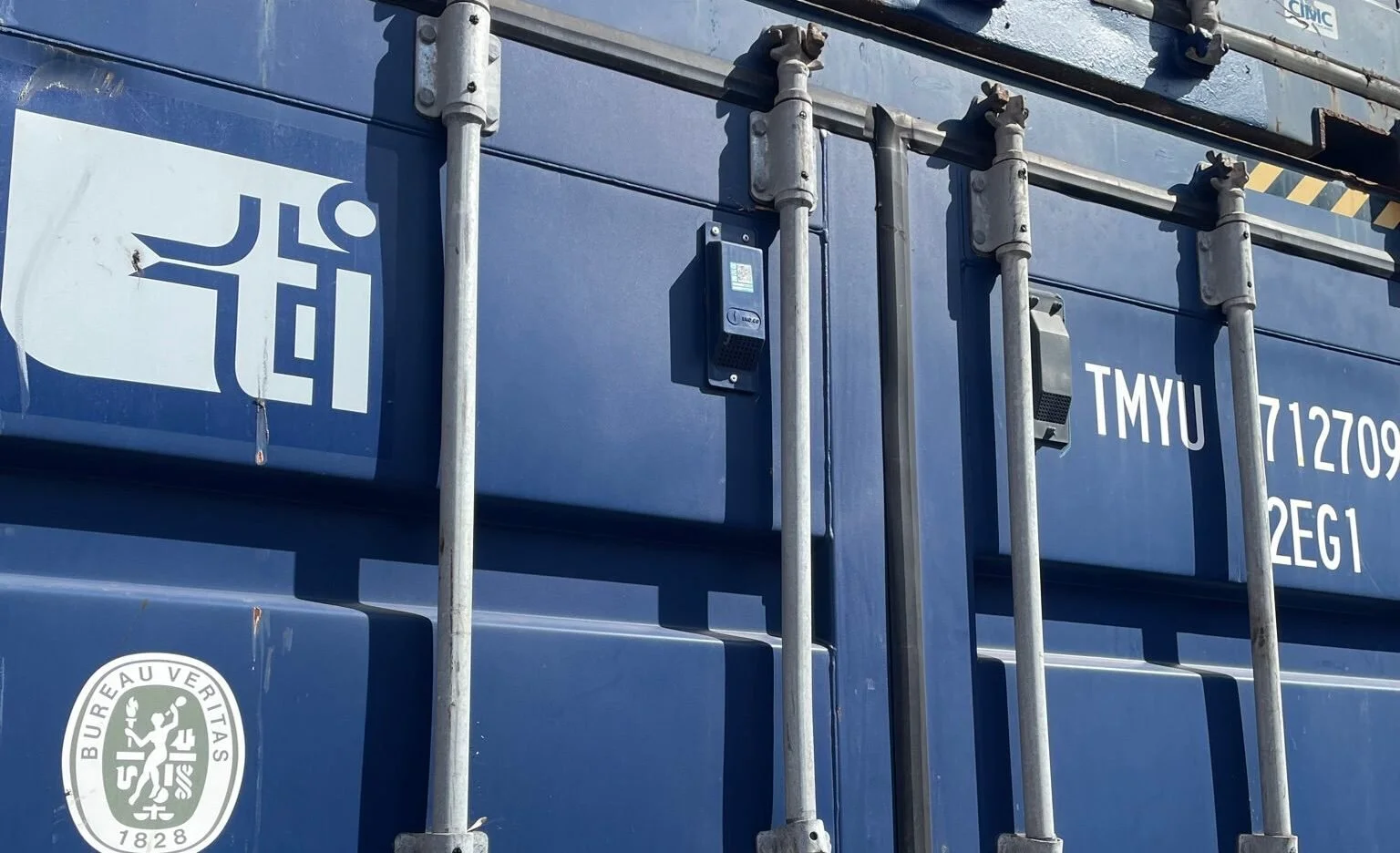
Transinsular, the largest Portuguese maritime cargo shipping company, implemented the Vodafone Smart Container solution to monitor the location and integrity of its containers. This technology was developed by Sensefinity.
The solution was installed in 90% of Transinsular's container fleet, which operates between Mainland Portugal, Azores, Madeira and Cape Verde.
Matthieu Roger, Administrator of Transinsular, explains that “this technology allows Transinsular to optimize the rotation of its containers by 20%”

Read the Executive Digest report.

Earth Day 2022


Sensefinity is proud to be part of this global effort to reduce emissions. With Sensefinity’s logistic monitoring platform, we help companies optimize their operations and traffic routes, reducing pollution.

In addition to route optimization, Sensefinity's platform also monitors the condition of food transport, preventing it from deteriorating.

In the last 5 years we’ve helped retails supermarkets save 1,601,480 tons of food by alerting for bad transport conditions! All these savings correspond of thousands of extra truck trips that would be necessary and that were avoided accounting for more than 5,420,393 tons of CO2 reduced!

This is the way to go towards halving the emissions by 2030: prevent all the unnecessary extra fuel-based trips.


On this Earth Day, we honor our commitment to not only be a climate sensitive SME, but also to make it our core mission to work to help other SMEs reduce waste and emissions and thus have a positive impact on our planet.


The time to act is now! Let's invest in our planet!


#InvestInOurPlanet

#EarthDay


Dream it

〰️

Dream it 〰️

Sustainable Supply Chain Technology

sustainable_logistics

Improving Food Security Using IoT

1.3 billion tons of food spoils and is wasted every single year, that's about one-third of the total amount of food that is produced. To look at it another way, 1.3 billion tons of food could feed between 2 and 3 billion people, each year.

Current figures suggest that of the 7 billion people on this planet, 925 million are starving, so even if we can't produce more food sustainably, saving just half of the wasted food could solve world hunger.

Read more here: Sustainable Supply-Chains.

Sustainable Technology for the Supply Chain

safe food supply

Improving Food Security Using IoT

1.3 billion tons of food spoils and is wasted every single year, that's about one-third of the total amount of food that is produced. To look at it another way, 1.3 billion tons of food could feed between 2 and 3 billion people, each year.

Current figures suggest that of the 7 billion people on this planet, 925 million are starving, so even if we can't produce more food, saving just half of the wasted food could solve world hunger.

Learn how Sensefinity is leveraging technology to feed the world in the Well, that’s interesting blog.

Wegweisende Konzepte gegen Lebensmittelverschwendung

foodwaste.jpg

Die Rabobank und ihre Direktbankenmarke RaboDirect Deutschland gehen am 26. März mit Food Furore an den Start. Im Rahmen dieses neuen Veranstaltungsformats der niederländischen Food & Agri-Bank wurden von der fünfköpfigen Jury jetzt sechs Unternehmen ausgewählt, die beim Start-up-Pitch in Berlin ihre Konzepte gegen Lebensmittelverschwendung präsentieren dürfen.

Food Furore stellt die globale Verschwendung von Ressourcen im Lebensmittel- und Agrarbereich in den Mittelpunkt und präsentiert mögliche Lösungsansätze, um die Menge an Essen zu reduzieren, die weltweit im Müll landet: Nach Angaben der Welternährungsorganisation (FAO) ist das ein Drittel aller weltweit produzierten Lebensmittel. Das entspricht etwa 1,3 Milliarden Tonnen an Lebensmitteln und einem finanziellen Schaden von rund 630 Milliarden Euro in den Industrieländern sowie 285 Milliarden Euro in Entwicklungsländern.

https://www.rabodirect.de/ueber-uns/neuigkeiten/2020/food-furore-startups-praesentieren-wegweisende-konzepte

Top IoT Application in Smart Farming: Discover Amazing Facts

Top IoT Application in Smart Farming: Discover Amazing Facts

By now, the Internet of Things (IoT) has added a pace to various industries with its outstanding application. From health to education, from manufacturing to transport IoT is everywhere. Not only that even in the Agriculture industry, but Internet of Things (IoT) has also been easing things from the past few years. Research shows, in 2018, the global agricultural industry approached USD 1.9 trillion (approximately), which is increasing day by day. If we calculate the number based on Compound Annual Growth Rate By 2024, it is expected to reach USD 4.4 billion, which is almost of 20%.