
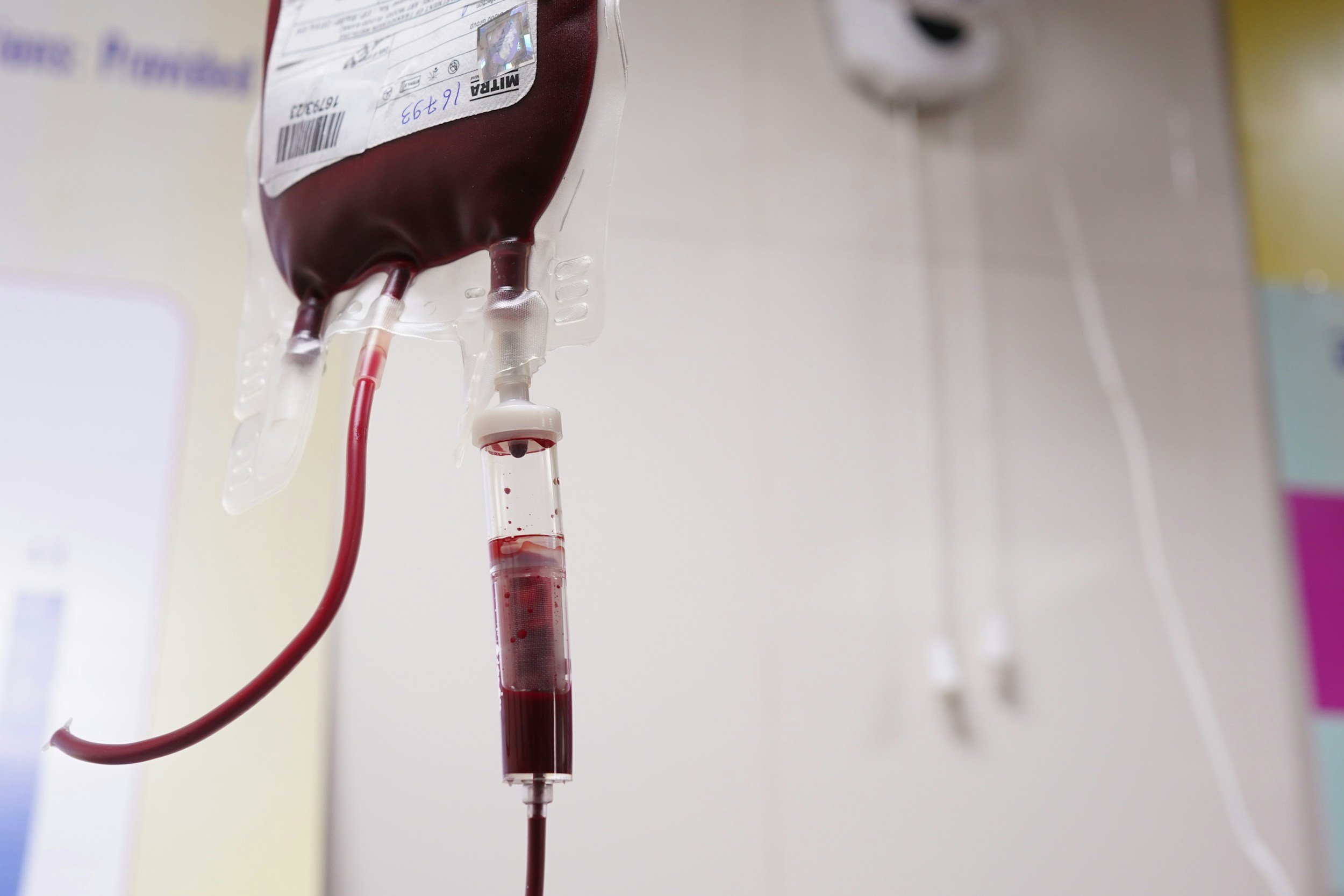
On 2 November 2026, a cyberattack reached refrigeration systems serving three sites of the Établissement français du sang (EFS), France’s national blood service. Attackers altered temperature and defrosting thresholds in cold rooms holding plasma and blood samples. The incident did not result in lost blood products or an interruption to collection and distribution — because monitoring alarms exposed the physical anomaly early enough for people to act.[1][2]
That outcome deserves attention far beyond healthcare. It demonstrates a critical principle for every temperature-controlled supply chain: when a connected controller can no longer be trusted, an independently observed physical condition may become the fastest reliable signal that something is wrong.
What happened at the French blood service
The EFS said it was not attacked directly. The incident affected refrigeration equipment managed through a supplier and reached monitoring and control systems at three EFS locations. Temperature and defrosting thresholds were raised to extremely high levels.[1][3]
The affected rooms contained plasma intended for transfusions, plasma used to manufacture medicines and samples maintained for biobanks. EFS monitoring and alarm systems identified the anomalies. Depending on the site, personnel brought the equipment under control or neutralised it, while stored products were secured or transferred preventively to other facilities.[2][3]
EFS reported no health impact and no loss of blood products. Blood collection and distribution continued, while France’s national cybersecurity agency, ANSSI, and the Ministry of Health investigated the event.[2][3]
The exact intrusion path, responsible actor and relationship to the wider European refrigeration attacks had not been publicly established when the incident was reported. Similarity is not attribution: common operational effects do not prove a common attacker.
The alarm was not a secondary feature
The most important fact is not the extreme value entered into a controller. A configured threshold is not the same as an actual product temperature. The important fact is that the organisation detected an abnormal physical condition early and had a response process capable of protecting the inventory.
This changes how cold-chain resilience should be designed. A refrigeration control system performs an essential function, but it should not be the only source used to prove that the environment is safe. If the controller, its credentials or its remote-management path is compromised, its readings and settings may also be untrustworthy.
A separate monitoring layer can provide an independent view of the actual storage environment. This is a form of cyber-physical resilience: cybersecurity controls work to prevent and contain the intrusion, while independent sensors reveal whether the physical process is moving outside safe limits.
Where Sensorice fits
Sensefinity’s Sensorice can monitor conditions such as temperature and humidity independently from the refrigeration controller and generate real-time alerts when configured limits or abnormal trends are detected.
In an incident like the one affecting EFS, that independent observation can help an operator:
detect a temperature excursion before the stored product is compromised;
compare the physical measurement with the controller’s reported state;
alert personnel even when the primary control interface is unreliable;
document when the excursion began, how far it progressed and when conditions recovered;
support decisions to transfer, quarantine or release inventory;
preserve a time-stamped evidence trail for quality, insurance and incident review.
Sensorice does not identify malware, determine the attacker or prove that an anomaly was caused by a cyberattack. It is not a replacement for network segmentation, multi-factor authentication, supported firmware, protected remote access, endpoint detection, backups or an OT incident-response plan. Its role is narrower and operationally important: measure the physical consequence independently and reduce the time between deviation and action.
A practical resilience model for critical cold storage
Organisations responsible for blood products, pharmaceuticals, food or other sensitive inventory should treat remote refrigeration access as part of their cyber-risk perimeter.
A defensible architecture combines four layers:
Prevent: remove direct internet exposure, replace default credentials, require protected remote access, patch supported controllers and segment refrigeration networks.
Detect digitally: monitor authentication, configuration changes, controller logs and unusual remote sessions.
Detect physically: use independently powered and connected sensors to monitor real conditions and alert through a path that does not depend on the refrigeration controller.
Respond: define who receives the alert, who can isolate the affected system, where inventory can be transferred and what evidence must be preserved.
Alerts only create value when connected to authority and action. Escalation paths should be tested, contact details maintained and backup storage capacity understood before an incident occurs.
From food loss to patient safety
The recent attacks on European supermarkets demonstrated that compromised refrigeration can rapidly destroy inventory and interrupt operations. The EFS incident shows that the same technical exposure can reach healthcare cold chains, where the consequences extend beyond financial loss.
In this case, alarms and human intervention prevented harm. That is not evidence that the risk was small. It is evidence that defence in depth worked.
Every organisation operating critical cold storage should now ask three questions:
Can a supplier or attacker change our refrigeration settings remotely?
Would we still know the real temperature if the controller were compromised?
Can the right person act before the product crosses its safe limit?
For cold-chain operators, independent real-time monitoring is no longer only a quality-control capability. It is a practical control for limiting the physical consequences of a cyber incident.
Sources
[1] The Guardian — French blood banks hacked in latest cyber-attack on Europe
[2] Associated Press — Cyberattack on French blood banks thwarted before damage