Cargo insurance has traditionally relied on information collected before and after a journey. The shipper declares the goods and route, the insurer evaluates historical risk, and—if something goes wrong—the parties reconstruct the incident from documents, emails, photographs and testimony.
The most important part of the journey is often missing: reliable data from the cargo while the risk is unfolding.
Connected trackers and sensors change that model. They can report location, temperature, humidity, shock and other conditions in real time, generating alerts before an exception becomes a total loss. They can also preserve an evidence trail for claims, liability analysis and future underwriting.
This is the shift from tracking to insurability: using operational data not only to find cargo, but to understand and actively reduce the risk attached to it.
Insurance should help prevent the claim
Traditional insurance provides financial protection after a covered loss. Connected insurance can add a second layer: earlier warning while intervention is still possible.
Consider a refrigerated pharmaceutical shipment. A temperature alarm at the destination may confirm that the product is unusable. An alert during transport may allow the carrier to repair the refrigeration unit, move the cargo or protect the remaining shelf life.
The same principle applies to theft, route deviation, excessive humidity, impact and unexpected dwell time. The value of real-time monitoring is not simply that it records the event. It gives operators an opportunity to change the outcome.
Allianz Commercial has described cargo tracking as a risk-management tool that enables companies to act when goods are damaged or move off route. It also notes that real-time analysis of sensor data can support mitigation—for example, responding to excessive moisture or temperature before the damage becomes worse.[2]
At Sensefinity, this is the foundation of our Insurance of Things approach: connect the insured asset, detect harmful conditions and turn real-time data into preventive action.[3]
Better evidence can mean faster claims
When prevention is no longer possible, data still matters.
A cargo claim often raises difficult questions:
When did the damage begin?
Where was the shipment at that moment?
Was the temperature already outside specification before a handover?
Did a severe shock occur during loading, road transport or terminal handling?
Was the container opened outside an authorized location?
Which organization had custody when the event occurred?
Without an independent record, each participant may hold a different version of the journey. The result can be long correspondence, expert investigation and delayed settlement.
TT Club identifies specific insurance benefits from smart-container data. Real-time visibility can help insurers understand the volume and condition of units at risk, while an audit trail can help identify the origin of an incident or a potentially liable party. According to TT Club, this can reduce lengthy investigations or provide earlier corroboration of findings.[1]
Allianz Commercial likewise notes that IoT devices and telematics can help insurers assess risk, validate claims more efficiently and evaluate liability more accurately. Its analysis also connects real-time event data with stronger fraud detection and faster claims processing.[6]
A sensor record does not decide coverage by itself; policy terms and professional claims assessment still apply. But it can replace uncertainty with evidence.
From generalized assumptions to shipment-level risk
Cargo policies must often price risk using broad categories: commodity, route, mode of transport, packaging, claims history and security procedures. These factors remain important, but they do not always describe what happens on an individual journey.
Two identical shipments on the same route can have very different risk outcomes. One may remain continuously monitored, follow authorized geofences and stay within temperature limits. The other may experience an unexplained stop, a route change and a prolonged condition excursion.
Real-time operational data creates the possibility of evaluating those differences. Over time, insurers and cargo owners can identify patterns such as:
routes or handovers associated with repeated exceptions;
facilities where dwell time or temperature excursions are more frequent;
packaging configurations that experience excessive shock;
security procedures that reduce unauthorized movement;
operators that consistently maintain agreed conditions.
This does not guarantee lower premiums. Pricing and coverage remain decisions for insurers and brokers. It does, however, give a well-managed shipper better evidence of its actual controls and performance—and gives the insurer better information for approval, terms and risk engineering.
The cargo needs its own source of truth
Vehicle telematics is valuable, but the truck and the cargo are not the same insured asset.
A trailer may be found after the pallets have been removed. A vehicle can follow the correct route while the goods inside experience excessive heat or humidity. A container can arrive with no visible external damage even though its contents suffered a critical shock.
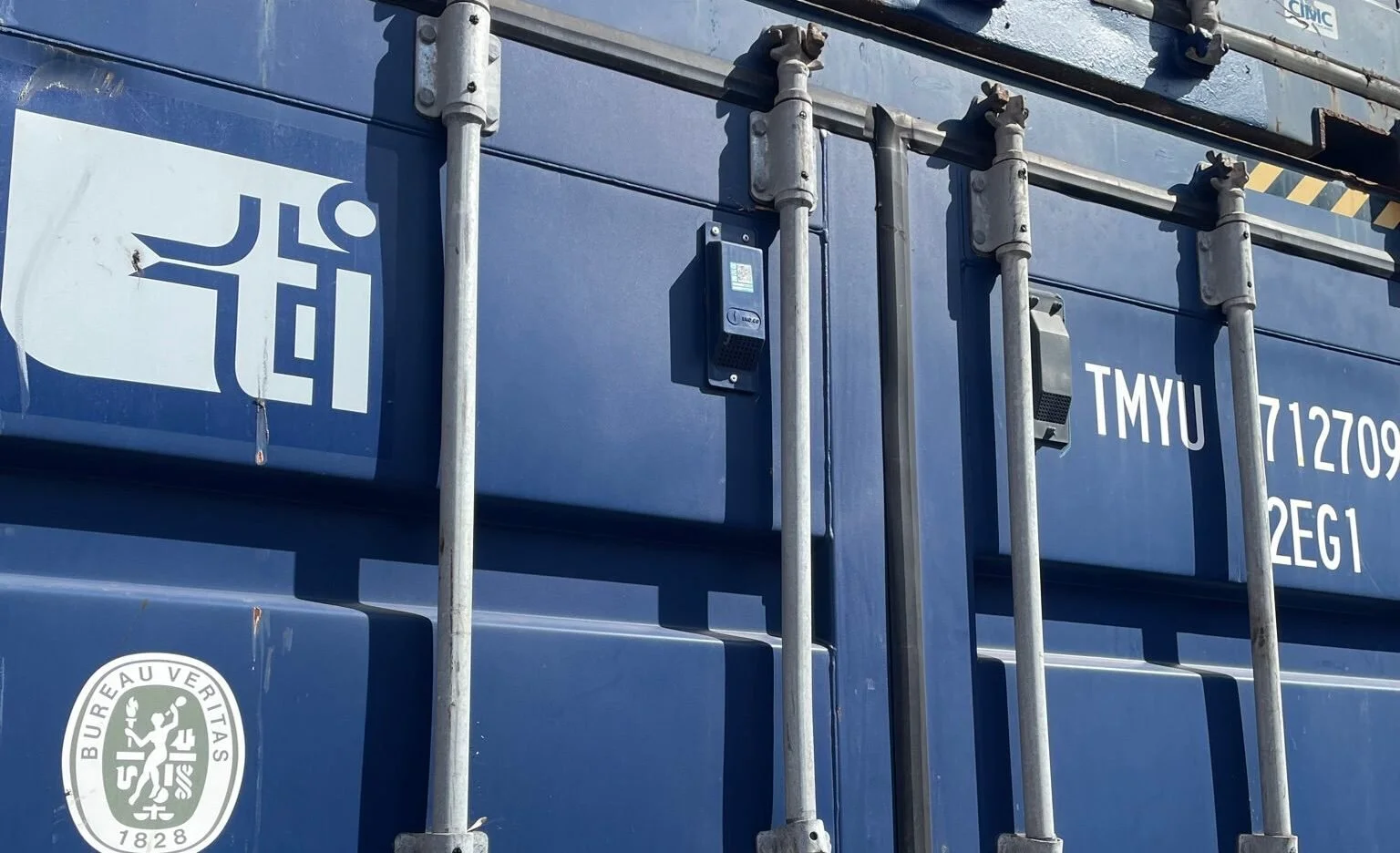
Cargo-level monitoring closes this gap. Sensefinity’s NB-IoT trackers and smart sensors can be attached to containers, pallets, crates or selected high-value packages. They support location reporting, configurable geofence alerts, environmental thresholds and datalogging across long journeys.[4]
The result is a journey record centred on what is actually insured: the goods.
Trusted sharing across multiple parties
Insurance claims involve organizations that do not necessarily share the same systems: cargo owners, carriers, freight forwarders, warehouses, terminals, surveyors, brokers and insurers.
Data must therefore be useful without requiring every participant to surrender access to its internal infrastructure.
Sensefinity’s logistics blockchain can register selected events collected by trackers and sensors, including location and environmental conditions. Authorized partners can access a shared, tamper-resistant record without needing direct access to one another’s operational systems.[5]
This is particularly relevant to chain-of-custody questions. A trusted event history can support audits, clarify handovers and reduce disputes over which version of the journey is correct.
The technology should not create a new data burden. The objective is to preserve the events that matter: threshold breaches, route deviations, custody changes and other exceptions connected to the insured risk.
A practical Insurance of Things model
A connected cargo-insurance program can be built in six steps:
Identify the critical risk. Theft, temperature, humidity, shock, delay or unauthorized access.
Instrument the insured asset. Select the container, pallet, crate or item that must remain visible.
Define operational thresholds. Establish expected routes, geofences, condition limits and escalation rules.
Act on alerts. Assign named responders who can intervene before the loss becomes irreversible.
Preserve the evidence. Maintain a reliable timeline for claims, audits and performance analysis.
Learn from repeated journeys. Use historical data to improve routes, packaging, partners and risk controls.
This model creates value for both sides. The cargo owner gains earlier warning and stronger evidence. The insurer gains better visibility into risk quality, loss-prevention measures and the circumstances surrounding a claim.
Insurance becomes part of the operation
The future of cargo insurance is not a policy document disconnected from the physical journey. It is a risk partnership supported by live information.
TT Club’s vision of smart containers includes real-time condition data, geofences, early alerts and better audit trails for insurers.[1] Allianz sees sensor information supporting loss mitigation, efficient claims validation and more accurate risk assessment.[2][6]
Sensefinity brings those capabilities to the cargo level. Through trackers, sensors, analytics, alerts and trusted data sharing, our Insurance of Things approach connects financial protection with operational prevention.
Because the best claim is not merely the one settled quickly. It is the loss detected early enough to prevent.
Explore Sensefinity’s Insurance of Things solution or talk to us about a connected risk program for your cargo.
Sources
[1] TT Club, “TT Talk — What can we get out of a box?”: https://www.ttclub.com/news-and-resources/news/article/tt-talk-what-can-we-get-out-of-a-box/
[2] Allianz Commercial, “Sensors could improve navigation, supply chain and cargo risk management”: https://commercial.allianz.com/news-and-insights/expert-risk-articles/sensors-supply-chain-and-risk-management.html
[3] Sensefinity, “Insurance of Things”: https://www.sensefinity.com/insurance-of-things
[4] Sensefinity, “NB-IoT Trackers”: https://www.sensefinity.com/nbiot-trackers
[5] Sensefinity, “Blockchain”: https://www.sensefinity.com/blockchain
[6] Allianz Commercial, “Edge computing and cyber security”: https://commercial.allianz.com/content/dam/onemarketing/commercial/commercial/reports/commercial-edge-computing-and-cyber-security-report.pdfCargo insurance has traditionally relied on information collected before and after a journey. The shipper declares the goods and route, the insurer evaluates historical risk, and—if something goes wrong—the parties reconstruct the incident from documents, emails, photographs and testimony.
The most important part of the journey is often missing: reliable data from the cargo while the risk is unfolding.
Connected trackers and sensors change that model. They can report location, temperature, humidity, shock and other conditions in real time, generating alerts before an exception becomes a total loss. They can also preserve an evidence trail for claims, liability analysis and future underwriting.
This is the shift from tracking to insurability: using operational data not only to find cargo, but to understand and actively reduce the risk attached to it.
Insurance should help prevent the claim
Traditional insurance provides financial protection after a covered loss. Connected insurance can add a second layer: earlier warning while intervention is still possible.
Consider a refrigerated pharmaceutical shipment. A temperature alarm at the destination may confirm that the product is unusable. An alert during transport may allow the carrier to repair the refrigeration unit, move the cargo or protect the remaining shelf life.
The same principle applies to theft, route deviation, excessive humidity, impact and unexpected dwell time. The value of real-time monitoring is not simply that it records the event. It gives operators an opportunity to change the outcome.
Allianz Commercial has described cargo tracking as a risk-management tool that enables companies to act when goods are damaged or move off route. It also notes that real-time analysis of sensor data can support mitigation—for example, responding to excessive moisture or temperature before the damage becomes worse.[2]
At Sensefinity, this is the foundation of our Insurance of Things approach: connect the insured asset, detect harmful conditions and turn real-time data into preventive action.[3]
Better evidence can mean faster claims
When prevention is no longer possible, data still matters.
A cargo claim often raises difficult questions:
When did the damage begin?
Where was the shipment at that moment?
Was the temperature already outside specification before a handover?
Did a severe shock occur during loading, road transport or terminal handling?
Was the container opened outside an authorized location?
Which organization had custody when the event occurred?
Without an independent record, each participant may hold a different version of the journey. The result can be long correspondence, expert investigation and delayed settlement.
TT Club identifies specific insurance benefits from smart-container data. Real-time visibility can help insurers understand the volume and condition of units at risk, while an audit trail can help identify the origin of an incident or a potentially liable party. According to TT Club, this can reduce lengthy investigations or provide earlier corroboration of findings.[1]
Allianz Commercial likewise notes that IoT devices and telematics can help insurers assess risk, validate claims more efficiently and evaluate liability more accurately. Its analysis also connects real-time event data with stronger fraud detection and faster claims processing.[6]
A sensor record does not decide coverage by itself; policy terms and professional claims assessment still apply. But it can replace uncertainty with evidence.
From generalized assumptions to shipment-level risk
Cargo policies must often price risk using broad categories: commodity, route, mode of transport, packaging, claims history and security procedures. These factors remain important, but they do not always describe what happens on an individual journey.
Two identical shipments on the same route can have very different risk outcomes. One may remain continuously monitored, follow authorized geofences and stay within temperature limits. The other may experience an unexplained stop, a route change and a prolonged condition excursion.
Real-time operational data creates the possibility of evaluating those differences. Over time, insurers and cargo owners can identify patterns such as:
routes or handovers associated with repeated exceptions;
facilities where dwell time or temperature excursions are more frequent;
packaging configurations that experience excessive shock;
security procedures that reduce unauthorized movement;
operators that consistently maintain agreed conditions.
This does not guarantee lower premiums. Pricing and coverage remain decisions for insurers and brokers. It does, however, give a well-managed shipper better evidence of its actual controls and performance—and gives the insurer better information for approval, terms and risk engineering.
The cargo needs its own source of truth
Vehicle telematics is valuable, but the truck and the cargo are not the same insured asset.
A trailer may be found after the pallets have been removed. A vehicle can follow the correct route while the goods inside experience excessive heat or humidity. A container can arrive with no visible external damage even though its contents suffered a critical shock.
Cargo-level monitoring closes this gap. Sensefinity’s NB-IoT trackers and smart sensors can be attached to containers, pallets, crates or selected high-value packages. They support location reporting, configurable geofence alerts, environmental thresholds and datalogging across long journeys.[4]
The result is a journey record centred on what is actually insured: the goods.
Trusted sharing across multiple parties
Insurance claims involve organizations that do not necessarily share the same systems: cargo owners, carriers, freight forwarders, warehouses, terminals, surveyors, brokers and insurers.
Data must therefore be useful without requiring every participant to surrender access to its internal infrastructure.
Sensefinity’s logistics blockchain can register selected events collected by trackers and sensors, including location and environmental conditions. Authorized partners can access a shared, tamper-resistant record without needing direct access to one another’s operational systems.[5]
This is particularly relevant to chain-of-custody questions. A trusted event history can support audits, clarify handovers and reduce disputes over which version of the journey is correct.
The technology should not create a new data burden. The objective is to preserve the events that matter: threshold breaches, route deviations, custody changes and other exceptions connected to the insured risk.
A practical Insurance of Things model
A connected cargo-insurance program can be built in six steps:
Identify the critical risk. Theft, temperature, humidity, shock, delay or unauthorized access.
Instrument the insured asset. Select the container, pallet, crate or item that must remain visible.
Define operational thresholds. Establish expected routes, geofences, condition limits and escalation rules.
Act on alerts. Assign named responders who can intervene before the loss becomes irreversible.
Preserve the evidence. Maintain a reliable timeline for claims, audits and performance analysis.
Learn from repeated journeys. Use historical data to improve routes, packaging, partners and risk controls.
This model creates value for both sides. The cargo owner gains earlier warning and stronger evidence. The insurer gains better visibility into risk quality, loss-prevention measures and the circumstances surrounding a claim.
Insurance becomes part of the operation
The future of cargo insurance is not a policy document disconnected from the physical journey. It is a risk partnership supported by live information.
TT Club’s vision of smart containers includes real-time condition data, geofences, early alerts and better audit trails for insurers.[1] Allianz sees sensor information supporting loss mitigation, efficient claims validation and more accurate risk assessment.[2][6]
Sensefinity brings those capabilities to the cargo level. Through trackers, sensors, analytics, alerts and trusted data sharing, our Insurance of Things approach connects financial protection with operational prevention.
Because the best claim is not merely the one settled quickly. It is the loss detected early enough to prevent.
Explore Sensefinity’s Insurance of Things solution or talk to us about a connected risk program for your cargo.
Sources
[1] TT Club, “TT Talk — What can we get out of a box?”: https://www.ttclub.com/news-and-resources/news/article/tt-talk-what-can-we-get-out-of-a-box/
[2] Allianz Commercial, “Sensors could improve navigation, supply chain and cargo risk management”: https://commercial.allianz.com/news-and-insights/expert-risk-articles/sensors-supply-chain-and-risk-management.html
[3] Sensefinity, “Insurance of Things”: https://www.sensefinity.com/insurance-of-things
[4] Sensefinity, “NB-IoT Trackers”: https://www.sensefinity.com/nbiot-trackers
[5] Sensefinity, “Blockchain”: https://www.sensefinity.com/blockchain
[6] Allianz Commercial, “Edge computing and cyber security”: https://commercial.allianz.com/content/dam/onemarketing/commercial/commercial/reports/commercial-edge-computing-and-cyber-security-report.pdf